



Powering India’s AI Backbone: Priya Krishnamurthy on Altos’ Bold Bet on Sovereign, Scalable Infrastructure
 Editor
As India accelerates toward an AI-first future, Altos India is positioning itself at the heart of this transformation. Priya Krishnamurthy outlines how performance, sovereignty, and accessibility are redefining enterprise infrastructure.
Altos India, a subsidiary of Altos Computing Inc. under the Acer Group, is steadily emerging as a formidable force in the country’s AI and high-performance computing ecosystem. With a strong focus on delivering integrated solutions across servers, storage, networking, and AI platforms, the company is enabling enterprises, governments, and data-driven organizations to build future-ready digital infrastructure. Its portfolio—spanning HPC, VDI, HCI, and AI workloads—reflects a clear commitment to performance, scalability, and cost efficiency.
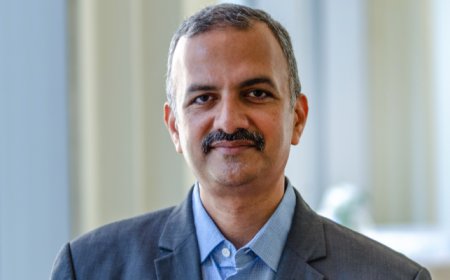
At the helm of this strategic push is Priya Krishnamurthy, Director, Altos India, a seasoned industry leader with over 25 years of experience across enterprise sales, product management, and business strategy. Having spent over two decades within the Acer ecosystem, Priya brings a rare blend of technical depth and market insight. Her leadership spans critical sectors including government, BFSI, enterprise, SMB, and education—making her a key architect in Altos India’s growth journey and its expanding footprint in the AI infrastructure space.
With a strong academic foundation in Electronics & Communications Engineering and a postgraduate degree in Marketing from IIM Calcutta, Priya has consistently demonstrated the ability to align technological innovation with business outcomes. Her experience in steering both consumer and commercial businesses to growth, coupled with her expertise in enterprise solutions, places her at the forefront of India’s evolving digital infrastructure narrative.
In this exclusive interaction with SME Channels, Priya Krishnamurthy delves into how Altos India is shaping the future of AI infrastructure through its high-performance server portfolio and integrated AI stack. She discusses the competitive positioning of Altos’ R-series servers, the growing demand for on-premise and hybrid AI deployments, and the company’s vision for building sovereign, Make-in-India AI ecosystems. The conversation also explores sectoral adoption trends, pricing strategies against hyperscaler clouds, and Altos’ roadmap toward becoming a full-stack AI solutions provider—offering a comprehensive view of how India’s infrastructure backbone is being reimagined for the AI era. Edited excerpts…
“By offering a cost-effective yet high-performance AI infrastructure platform, we aim to make advanced AI computing more accessible within India’s rapidly growing digital ecosystem.”
- Priya Krishnamurthy, Director, Altos India
Can you share specific benchmarks or real-world use cases where this server significantly outperforms existing solutions?
The Altos R300 series server is a dual socket 2U high-performance rack server powered by 6th Gen Intel® Xeon® Scalable processors, designed to support demanding enterprise workloads. It is optimized to handle a wide range of use cases, including Big Data analytics, high-performance computing (HPC), virtualization, and edge and cloud computing environments.
With support for the latest technologies across the stack from advanced CPUs and high-speed NVMe storage to Titanium-rated power supplies, the platform delivers enhanced compute performance, faster data access, and improved energy efficiency.
In real-world deployments, this architecture enables organizations to process large data sets faster, run complex AI and analytics workloads more efficiently, and support highly virtualized environments with improved scalability and reliability. As a result, the Altos R300 series provides enterprises with state-of-the-art infrastructure capable of outperforming many existing legacy server solutions in performance, flexibility, and operational efficiency.
Are there plans to export these AI servers globally, and how competitive are they internationally?
In the initial phase, Altos intends to primarily focus on addressing the domestic market, as we see strong demand for AI infrastructure emerging in India over the coming quarters. With the rapid expansion of the country’s data centre, AI, and digital transformation ecosystem, the domestic opportunity itself is significant.
That said, we are open to exploring export opportunities in the future, particularly in Southeast Asian markets, where demand for scalable AI and high-performance computing infrastructure is also growing. Given the platform’s enterprise-grade architecture, global technology partnerships, and competitive performance capabilities, we believe these AI servers have the potential to be highly competitive in international markets as well.
Which sectors in India are expected to adopt this technology first—government, start-ups, or enterprises?
We see adoption coming from a wide range of sectors, as the Altos R370 is a versatile, general-purpose server that can handle AI workloads alongside traditional enterprise applications. Because of this flexibility, we expect early interest from start-ups, enterprises, and government organizations, each leveraging the platform for different use cases.
For instance, start-ups can use the infrastructure to build and scale AI-driven applications, while enterprises can deploy it for workloads such as data analytics, virtualization, and AI model development. At the same time, government departments and public sector organizations can leverage it for data-intensive applications and digital infrastructure initiatives.
Overall, we believe the server’s scalability and performance allow us to support deployments across multiple environments, from innovation-driven start-ups to large enterprise data centres and government-led digital projects.
What is the pricing strategy, and how does it compare with hyperscaler cloud alternatives? How do you plan to compete with established AI infrastructure providers globally?
Our pricing strategy is focused on being highly competitive and partner-friendly, enabling our ecosystem partners to actively participate in tenders from various government agencies and large enterprise projects. By offering a cost-effective yet high-performance AI infrastructure platform, we aim to make advanced AI computing more accessible within India’s rapidly growing digital ecosystem.
When compared with hyperscaler cloud alternatives, our approach allows organizations to build on-premise or hybrid AI infrastructure that provides greater control over data, security, and long-term operational costs, particularly for large-scale or continuous workloads.
From a global competitiveness standpoint, we aim to complement established AI infrastructure providers by offering a state-of-the-art, Make-in-India platform that supports the creation of sovereign AI infrastructure for Indian customers. This enables enterprises, cloud providers, and system integrators to build locally deployed AI environments that meet regulatory, data residency, and performance requirements, while still leveraging globally competitive technologies.
With increasing concerns around data sovereignty, how does this server ensure secure, compliant AI deployments within India?
We designed our R300 series servers with a strong focus on reliability, security, and operational resilience, which are critical for organizations deploying AI infrastructure within India’s evolving data sovereignty framework. Our state-of-the-art platform offers high compatibility with a wide range of enterprise and security software, enabling organizations to integrate it seamlessly into secure IT environments.
The servers are built with features that support high fault tolerance, system stability, and disaster recovery capabilities, ensuring business continuity even for mission-critical workloads. In addition, they can be deployed alongside advanced data security and compliance tools, allowing organizations to implement robust governance, monitoring, and protection mechanisms.
By enabling on-premises or hybrid deployments, we help customers maintain greater control over their data, infrastructure, and regulatory compliance, which is increasingly important for sectors handling sensitive or regulated data in India.
Are there any plans for a full-stack AI offering (hardware + software + services)?
Yes, we are already moving towards a full-stack AI offering that combines hardware, software, and services. Alongside our AI servers, we have launched Altos AI Works, a software platform designed to help customers efficiently manage and utilize GPU resources for AI and high-performance workloads.
To make the solution more accessible and cost-effective, we have introduced the software under a perpetual licensing model rather than a subscription-based model, allowing customers to optimize their AI infrastructure without recurring licensing costs. This approach enables us to offer a highly competitive and integrated hardware–software stack.
In addition, our servers come with three years of on-site warranty as standard, ensuring reliability and strong after-sales support. Customers also have the flexibility to extend the warranty either at the time of purchase or later, depending on their operational requirements. Through this integrated approach, we aim to deliver a comprehensive and cost-effective AI infrastructure solution for our customers.
How aligned is this launch with India’s national AI and semiconductor policies? What level of support/incentives have you received from the government for this?
Our launch is closely aligned with India’s broader push to strengthen its AI and digital infrastructure ecosystem, particularly through initiatives that encourage local manufacturing and technology development. By introducing Make-in-India (MII) AI infrastructure solutions, we aim to support the country’s vision of building a more self-reliant and resilient technology ecosystem.
In the initial phase of our operations, we intend to work with a network of EMS (Electronics Manufacturing Services) partners, which will allow us to scale manufacturing efficiently, build a diverse product portfolio, and create greater resilience within the supply chain.
At this stage, our focus is not specifically on pursuing government incentives. Instead, our priority is to expand our portfolio of Make-in-India products and bring the latest global technologies to the Indian market, enabling customers to access advanced AI infrastructure while supporting the growth of the domestic technology ecosystem