



Harness Bets on AI-Native Software Delivery as India Emerges as a Global Innovation Powerhouse
 Editor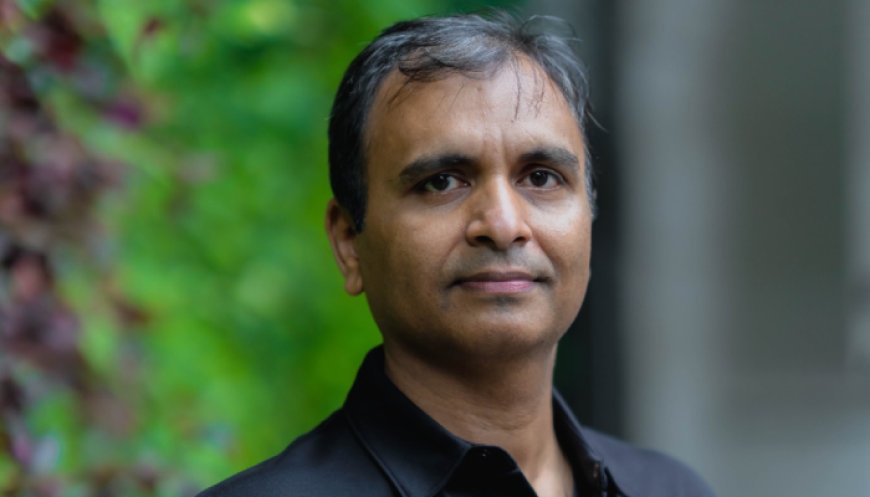
With India driving the majority of its global R&D efforts, Harness is redefining software engineering through agentic AI, enabling enterprises to accelerate innovation without compromising security, quality, or governance.
BY MANASH RANJAN DEBATA
Artificial Intelligence is rapidly transforming the global technology landscape, but few companies are approaching this shift as comprehensively as Harness. While much of the industry remains focused on AI-assisted coding, Harness is pioneering a broader vision—one where AI orchestrates every stage of the software delivery lifecycle, from development and testing to security, infrastructure management and governance. At the heart of this transformation is India, which has emerged not merely as a talent destination but as a strategic innovation hub driving product development for global markets. With a significant percentage of Harness' R&D operations based in India, the company is placing Indian engineering leadership at the center of its next phase of growth and innovation.
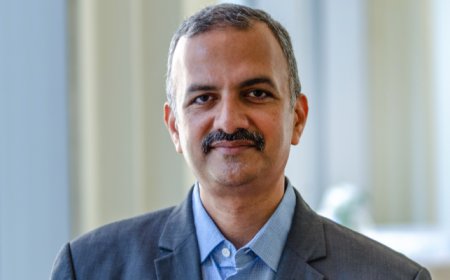
To harness a compelling perspective on the future of software engineering in the age of agentic AI, SME Channels Editor Manash Ranjan Debata had spoken to Prashant Verma, Senior Vice President and Head of R&D India at Harness. From exploring how AI is reshaping developer roles, redefining DevSecOps practices, transforming enterprise software delivery, the discussion moves to understasnd how the likes of Harness are helping to elevate India's position in the global innovation ecosystem. Verma also sheds light on the cultural, technological and organizational shifts required to build world-class R&D teams capable of creating products for a rapidly evolving digital economy.
Further, this SME Channels exclusive delves deeper into some of the most pressing questions confronting the technology industry today: How will AI redefine engineering talent and productivity? What challenges will enterprises face as AI-generated code becomes ubiquitous? Why is India becoming a preferred destination for advanced product engineering and AI innovation? And how can organizations balance speed, security, quality and governance in an increasingly AI-driven world? Through candid insights and real-world examples, Verma outlines a future where AI is not merely a productivity tool but a foundational force reshaping the entire software development lifecycle, creating new opportunities for businesses, engineers and innovators alike. Edited Excerpts…
Q. India is rapidly emerging as a global AI and software engineering hub. How are you positioning India’s R&D ecosystem to influence global product innovation at Harness rather than just support it?
India's evolution from a technology services powerhouse to a global innovation hub has been one of the defining shifts in the technology industry. Over the past few decades, the country has developed a deep reservoir of engineering talent capable of rapidly adapting to and building upon every major wave of technological disruption. Today, that capability is proving especially valuable in the age of artificial intelligence.
At Harness, India is not merely a delivery centre—it is a strategic innovation engine. A significant percentage of the company's global R&D workforce is based in India, reflecting both the quality of talent available and the confidence Harness places in its Indian engineering and product teams. These teams play a central role in understanding complex global challenges and translating them into scalable SaaS solutions for customers worldwide.
Since its inception in 2017, Harness has been focused on a singular mission: enabling software developers to deliver code to production faster while maintaining the highest standards of security, quality and cost efficiency. That mission has become even more relevant as AI reshapes the software development landscape. Today, Harness serves nearly 1,000 customers globally, helping them manage every aspect of the software delivery lifecycle—from development, testing and deployment to security, infrastructure management and feature experimentation. Increasingly, these capabilities are being enhanced through agentic AI workflows designed to support the next generation of software engineering.
 "At Harness, we are building an AI-native software delivery platform that empowers engineering teams to innovate at unprecedented speed while maintaining the trust, resilience and operational excellence that modern enterprises demand."
— Prashant Verma, Senior Vice President & Head of R&D India, Harness
Q. The software delivery landscape is being reshaped by AI-assisted coding and autonomous workflows. Do you believe AI will fundamentally redefine the role of developers, testers, and DevOps engineers over the next five years?
Artificial intelligence is fundamentally transforming the nature of work across software development. While AI-powered code generation is dramatically increasing productivity, the true value lies not in generating code faster, but in orchestrating intelligence across the entire development lifecycle.
Traditionally, developers translated business requirements into code, quality engineers validated functionality through extensive testing, and DevOps teams managed deployment and infrastructure. AI is now reshaping each of these responsibilities.
For developers, coding itself is becoming less time-consuming. Instead, the focus is shifting toward defining clear specifications, designing robust architectures, establishing modular frameworks and effectively orchestrating AI agents to achieve desired outcomes. The emphasis is moving from writing code to directing and validating intelligent systems.
Similarly, quality engineers are transitioning from manually creating test cases to leveraging AI-driven testing frameworks capable of validating both functional and non-functional requirements. AI enables teams to explore edge cases, identify overlooked scenarios and significantly strengthen software quality assurance.
DevOps professionals are also experiencing a transformation. Their role increasingly revolves around orchestrating infrastructure, monitoring system health, identifying vulnerabilities and ensuring operational resilience through AI-assisted automation.
Beyond individual roles, AI is driving greater convergence across disciplines. The traditional boundaries separating developers, testers and DevOps engineers are gradually dissolving. Organizations are increasingly seeking professionals who possess a product-centric mindset—individuals focused on solving business problems rather than operating within rigid functional silos.
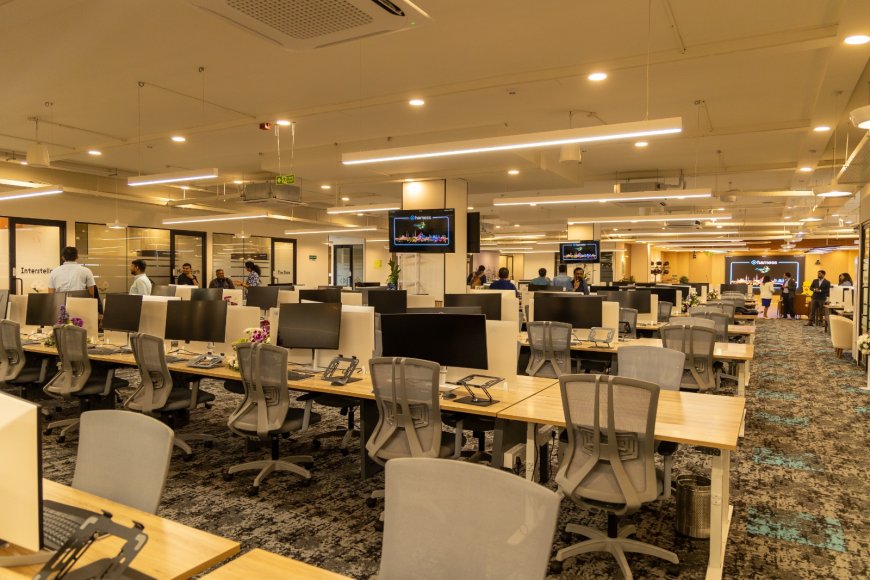
The Harness R&D facility in Bengaluru—home to one of the company's largest engineering teams and a strategic hub for developing AI-driven software delivery innovations for global markets.
Q. Many enterprises still struggle with balancing speed and security in software deployment. What are the biggest mistakes organizations make while scaling DevSecOps, and how can they avoid them?
Many organizations believe that faster code generation automatically translates into faster business outcomes. However, this assumption often creates significant challenges.
While AI may accelerate coding productivity by three or four times, the downstream processes of code review, testing, security validation and cost optimization frequently fail to keep pace. As a result, organizations encounter new bottlenecks as developers spend increasing amounts of time reviewing AI-generated code, identifying regressions, evaluating security risks and assessing the quality of generated outputs.
One of the most common mistakes enterprises make is treating security, quality and cost management as activities that occur after development is complete. In reality, these considerations must be embedded much earlier in the software delivery process.
Harness advocates a shift-left approach, where security policies, quality standards and cost controls are codified directly into the development pipeline. Rather than discovering vulnerabilities after deployment, organizations should establish intelligent guardrails that continuously validate software throughout its lifecycle.
Another challenge stems from the fragmented nature of modern DevOps environments. Critical operational data is often spread across dozens of tools, making it difficult for both humans and AI systems to establish meaningful context. Consolidating these workflows onto unified platforms is becoming increasingly important as organizations prepare for AI-native software development.
Q. India’s startup ecosystem is producing exceptional engineering talent, yet retaining deep-tech researchers remains a challenge. What does it take today to build a world-class R&D culture that can compete with Silicon Valley?
India does not suffer from a shortage of engineering talent. The country possesses one of the largest and most diverse technology talent pools in the world, including professionals who have built products at global technology giants, high-growth startups, Indian SaaS companies and consumer technology leaders.
The real challenge lies not in attracting talent but in creating opportunities where that talent can make a meaningful impact.
Organizations that successfully attract and retain top engineers understand the importance of ownership, innovation and purpose. Engineers are increasingly motivated by opportunities to solve complex problems, shape products at scale and contribute directly to business outcomes.
Equally important is fostering a culture of psychological safety, where experimentation is encouraged, diverse viewpoints are valued and innovation thrives. Companies that provide these conditions are better positioned to compete with leading global technology organizations for the best talent.
Q. With AI-generated code becoming increasingly common, concerns around code quality, hallucinations, and security vulnerabilities are growing. How should enterprises rethink governance and accountability in this new era?
As AI-generated code becomes more prevalent, enterprises must rethink how they approach governance, quality assurance and accountability.
Code generation itself is rapidly becoming commoditized. The real differentiator lies in maintaining strong software engineering principles, architectural discipline and robust governance frameworks.
Organizations must embed security checks, code quality validation and compliance controls directly into development environments. Rather than waiting until later stages of the lifecycle, vulnerabilities should be identified and addressed at the moment code is written.
The consequences of failing to implement these safeguards are already becoming visible. While many organizations report significant productivity gains from AI-assisted development, they are simultaneously experiencing increased review times, higher incident rates and growing numbers of regressions.
To fully realize the benefits of AI, enterprises must establish intelligent guardrails that ensure speed does not come at the expense of quality, security or reliability.
Q. Global technology companies are increasingly investing in India for advanced engineering work. What strategic advantages does India now offer beyond cost efficiency, especially in AI, cloud, and platform engineering?
India's appeal as a global technology hub extends well beyond economics. The country offers access to a large pool of highly skilled engineers who have built and operated world-class products serving global markets.
Equally important is the experience Indian teams have gained working across geographies, cultures and time zones. This ability to collaborate seamlessly with distributed teams has become a critical advantage for organizations developing products for international audiences.
Harness itself reflects this evolution. Despite being a Silicon Valley company, it established a significant presence in India from its earliest days. The company recognized that India possessed not only the talent required to support growth, but also the capability to drive innovation at a global scale.
Today, teams based in India are developing solutions that deliver measurable business outcomes for customers worldwide. One example involved helping a large financial institution reduce alert noise in its ticketing systems by 95% through Harness AI's ability to leverage comprehensive software delivery lifecycle intelligence and distinguish meaningful signals from irrelevant data.
Q. If you had to predict one major disruption that will completely transform software delivery and engineering productivity by 2030, what would it be — and are companies truly prepared for it?
By 2030, the most significant disruption in software engineering will not be AI-generated code itself, but the orchestration of AI across the entire software delivery lifecycle.
Industry forecasts suggest that software quality challenges could increase dramatically as AI-generated code proliferates. Without adequate safeguards, organizations risk introducing vulnerabilities, defects and operational complexity at unprecedented scale.
Addressing these challenges requires enterprises to think beyond coding assistants. AI must be embedded across quality assurance, security, infrastructure management, disaster recovery and operational governance. Every aspect of software delivery must become AI-enabled and intelligently coordinated.
Human teams alone will struggle to operate at the speed demanded by modern software development. The organizations that succeed will be those that combine AI-driven productivity with comprehensive governance frameworks, robust security controls and end-to-end lifecycle orchestration.
At the same time, digital transformation remains far from complete. Entire industries and business processes have yet to be fully digitized. Rather than reducing opportunities, AI is likely to create entirely new categories of innovation, generating fresh demand for technology talent and opening new frontiers for software engineering in the years ahead.