



ORACLE’S AI-FIRST PARTNER PLAY: TURNING CLOUD, DATA AND AI INTO BUSINESS OUTCOMES
 Editor
As AI reshapes enterprise technology, Oracle is recasting its partners from traditional solution providers into strategic transformation engines—combining cloud, data, industry expertise and AI to deliver measurable customer outcomes.
India’s technology landscape is moving beyond the first phase of digital transformation into an era in which AI, cloud, data and intelligent applications are becoming deeply intertwined with enterprise strategy. Oracle is positioning itself at the centre of this transition with an AI-native technology stack spanning infrastructure, databases and applications, while its expanding partner ecosystem is increasingly expected to convert these capabilities into tangible business outcomes. Oracle itself describes its partner strategy as extending across training and enablement, go-to-market collaboration, technical accelerators and customer-success support.
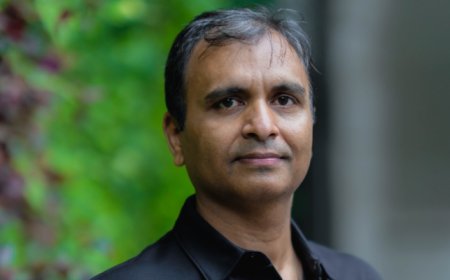
Against this backdrop, this Special SME Channels interaction with Arvind Nath Mehra, Head of Alliances & Channels – Technology, Oracle India, goes beyond the conventional conversation around cloud adoption and partner programmes. It seeks to understand how Oracle is reshaping the role of its channel ecosystem as enterprises move from AI experimentation to enterprise-scale implementation. The discussion probes the opportunities opening up around OCI, sovereign cloud and multi-cloud; how partners can move from being technology resellers to strategic transformation advisors; and how Oracle is helping them build the skills, IP, solutions and customer-success capabilities required for the AI era.
At its heart, the exclusive explores where the next wave of growth will come from for Oracle and its partners in India. It examines how AI-ready data platforms can turn fragmented enterprise data into usable intelligence; how multi-cloud is changing the nature of workload modernisation; which industries could present significant opportunities; how Oracle is investing in partner training, migration tools, AI capabilities and joint go-to-market initiatives; and why ISVs, SaaS companies, startups and digital-native businesses are becoming increasingly important to the ecosystem. Most importantly, Mehra explains what will distinguish the partners that thrive in the AI era: not technology credentials alone, but the ability to combine deep domain expertise, AI capabilities, early collaboration and sustained customer outcomes. Edited excerpts…
Q. Oracle Cloud Infrastructure has emerged as one of Oracle's biggest growth engines globally. In India, what unique opportunities do you see for channel partners to drive OCI adoption, particularly as enterprises accelerate AI, sovereign cloud, and multi-cloud strategies?
Oracle Cloud Infrastructure (OCI) has emerged as a significant growth engine for Oracle, as reflected in our revenue performance and business guidance. A major driver of this growth is the integration of AI capabilities across the Oracle technology stack.
At the infrastructure layer, OCI supports some of the largest AI infrastructure requirements, spanning both training and inferencing workloads. At the database layer, Oracle Database 26 AI capabilities bring multimodal and vector capabilities directly into the database, enabling enterprises and public-sector organisations to bring AI closer to their data. This is particularly relevant for organisations that do not want to move their data elsewhere simply to leverage AI.
At the applications layer, Oracle Fusion, NetSuite and industry-specific applications incorporate agentic AI as well as generative AI capabilities. In effect, Oracle is bringing AI capabilities across the infrastructure, database and application layers.
However, customers ultimately seek business outcomes rather than technology platforms alone. This is where our partners assume a pivotal role. They bridge the gap between technology and outcomes by bringing industry knowledge and domain expertise to address specific customer requirements and translate Oracle's capabilities into tangible business value.
We are also bringing distinctive capabilities in sovereign cloud and multi-cloud environments. On the sovereign-cloud front, we can provide options ranging from public-cloud infrastructure residing at a customer's location to dedicated environments, disaster-recovery configurations, and multi-tenant, white-label or co-label cloud environments. Through Oracle Alloy, partners can also offer an environment that replicates the capabilities of Oracle's public cloud while addressing specific customer requirements.
Across these models, partners remain central to the customer engagement. They help customers evaluate the appropriate deployment option based on factors such as location, performance, operating requirements and service needs. These engagements can be substantial in scale, encompassing initiatives such as data-centre exits, cloud modernisation and AI-led business outcomes.
“The strongest partners will combine their domain industry and AI expertise to solve complex business challenges.”
— Arvind Nath Mehra, Head of Alliances & Channels – Technology, Oracle India
Multi-cloud represents another significant opportunity. Oracle Database Cloud Services are available through Azure, AWS and Google Cloud Platform, with all three platforms live in India. This enables customers to leverage their existing hyperscaler investments while gaining access to Oracle capabilities within the same environment, both commercially and technically.
For partners, however, the opportunity extends well beyond providing technology. They need to identify the right workloads, undertake workload transformation, deliver the intended business outcomes and subsequently manage the customer's technology estate and overall cloud journey.
Consequently, our emphasis in India is increasingly on building greater depth and capability within the partner ecosystem. We want partners to invest in skills, develop their own usable intellectual property with Oracle, and work closely with us on planning and execution. There is therefore considerable opportunity for partners to deepen their capabilities and play a more strategic role in customers' cloud and AI transformation journeys.
Q. Oracle has significantly evolved the Oracle PartnerNetwork (OPN) with greater emphasis on enablement, co-selling, incentives, and technical expertise. How has this transformed the role of partners from traditional resellers into strategic cloud and business transformation advisors?
This is an area where we have made substantial enhancements over the last few quarters. The enhanced Oracle PartnerNetwork programme, in its current form, goes well beyond incentives and commercial benefits. It addresses the partner journey more comprehensively, from developing technical and sales capabilities to enabling customer success.
The programme covers the full spectrum of skills required by partners, including technical resources, sales resources and customer-success capabilities. Joint go-to-market initiatives are another important area of focus and are becoming increasingly central to our engagement with partners.
We also provide partner credits that can be utilised for marketing, tenancy requirements, core resource utilisation and access to expert resources from Oracle. The programme continues to evolve, with additional capabilities being introduced on an ongoing basis.
For instance, we have introduced assessment capabilities such as Matilda, which enable partners to evaluate migration requirements across a broad range of scenarios, from relatively straightforward migrations to highly complex and large-scale environments. We have also introduced the Oracle Migration Accelerator, or OMA, which provides migration funding for qualified migrations undertaken by partners.
Our joint go-to-market initiatives further enable Oracle and its partners to scale opportunities where there is clear market relevance. Taken together, these capabilities cover virtually the entire partner journey.
The most important practical change, however, has been the closer collaboration around customer opportunities. We are undertaking joint account planning and using Oracle Collaborative Customer Engagement, or CCE2, to visualise and manage the engagement cycle between Oracle's sales organisation and the partner.
The partner brings industry expertise and established customer relationships, while Oracle contributes product expertise along with the relevant technical and sales resources. This creates a more integrated engagement model, resulting in enhanced business opportunities and joint wins for Oracle and its partners.
Q. With AI becoming central to enterprise transformation, data quality and cloud infrastructure are now inseparable. How are Oracle and its partners collaborating to help Indian enterprises build AI-ready data platforms rather than isolated AI projects?
As I mentioned earlier, AI is now native across the Oracle technology stack, spanning infrastructure, data and applications.
Last year, we announced the general availability of the Oracle AI Data Platform. It brings together capabilities for preparing enterprise data and building AI applications, including data ingestion, semantic enrichment and vector indexing.
In practical terms, the platform enables organisations to connect business information with AI and translate the resulting intelligence into applications and outcomes that can deliver tangible value. That is at the heart of the proposition.
However, while the platform provides powerful capabilities, the ultimate requirement is to deliver a meaningful business outcome. This is where the partner assumes a critical role.
Partners make the technology relevant to individual enterprises. They identify the appropriate use cases, integrate the necessary data and build applications around the customer's business processes. They also help customers validate whether the resulting output is useful and reliable. Any AI implementation must produce dependable results, and the resulting workflow must deliver the intended business benefit.
The partner therefore plays a critical role in closing this entire loop. The implementation process effectively transforms demonstrations and technology propositions into reliable services that customers can use with confidence. Partners also remain engaged throughout the lifecycle of the project, providing continuity and helping customers derive sustained value from the implementation.
There has been considerable partner collaboration around this initiative globally. In India, TCS established an Oracle AI Data Platform lab and centre of excellence in Kolkata earlier this year. The facility is designed to help customers in India and globally address challenges arising from fragmented data systems, slow analytics and difficulties in scaling AI requirements. It also focuses on reusable architectures and accelerators.
This is one example of the investments being made by large global system integrators and other partners in the Oracle AI Data Platform. Ultimately, data is at the core of every AI journey, and data is an area where Oracle has significant strength.
Q. Many organizations today are embracing multi-cloud architectures instead of relying on a single cloud provider. How is Oracle positioning OCI through strategic alliances and technology partnerships to ensure customers enjoy flexibility without compromising on performance, security, or cost?
Multi-cloud has become a pervasive reality across the enterprise landscape. Large enterprises and digital-native organisations are already operating across multiple cloud environments. At the same time, organisations are increasingly adopting cloud-agnostic application architectures, allowing the most suitable cloud environment to be selected for a particular workload.
At Oracle, our multi-cloud approach is centred on making Oracle database cloud capabilities available through the other three major hyperscalers—Azure, Google Cloud Platform and AWS. We have more than 70 planned and live data-centre locations across these three hyperscalers, and all three are live in India.
Our objective is to give customers a practical way to use Oracle technology within the cloud strategy they have already adopted. This provides choice while also addressing critical technical requirements.
Many enterprises have already made substantial investments across multiple cloud providers and need to maximise those investments. That represents the commercial dimension. At the same time, many applications running in hyperscaler environments require Oracle capabilities such as RAC, Oracle XA or Autonomous capabilities, which means that the database needs to be located in close proximity to the relevant cloud environment.
We have therefore addressed both the commercial and technical dimensions of multi-cloud. The offering is performing strongly and is currently among Oracle's highest-growth product areas on a quarter-on-quarter basis.
From a partner perspective, however, the opportunity extends beyond simply making an Oracle database available within AWS, Azure or Google Cloud. It ultimately comes down to identifying the right workloads and determining where modernisation, transformation and AI adoption can create value.
These engagements are largely partner-driven. We are seeing collaboration among the hyperscaler, Oracle, the partner responsible for workload transformation and the customer. It is therefore a highly collaborative, multi-party engagement model.
For partners, the role extends well beyond selecting the destination cloud. It involves understanding application dependencies, executing migration and transformation, integrating the environment and establishing how it will be operated and managed going forward.
Q. India's digital economy is witnessing tremendous growth across manufacturing, BFSI, healthcare, telecom, and the public sector. Which industry verticals do you believe offer the greatest opportunity for Oracle's partner ecosystem over the next three to five years, and why?
I would take a broad view because AI adoption and AI transformation are going to be pervasive. Every organisation, irrespective of its industry or vertical, is likely to have a requirement for AI.
There will certainly be industry-specific requirements and use cases, and those distinctions will remain important. However, the fundamental demand for AI will exist across the board, spanning both traditional industry segments and emerging sectors.
If we look at the sectors where Oracle has strong incumbency and where data is particularly critical, these include BFSI, telecommunications, public services, healthcare, life sciences and manufacturing. In each of these sectors, data is fundamental to AI adoption, making the transformation opportunity particularly compelling.
These are also areas with significant Oracle technology footprints that need to be modernised into cloud environments and subsequently enabled for AI adoption. This can be achieved through Oracle public cloud, multi-cloud or hybrid-cloud environments, depending on the customer's requirements. We have addressable solutions across all these deployment models.
Another major opportunity lies in non-Oracle workloads, digital-native organisations and digital-native workloads. This represents a very large segment in terms of consumption, requirements and adoption, and it remains a key focus for hyperscalers, including Oracle.
Ultimately, AI cuts across every industry. AI consumption is becoming increasingly significant, and the opportunity therefore extends across the entire industry spectrum. It is, in many respects, a new white space across the market.
Q. The success of any partner ecosystem ultimately depends on profitability and customer success. Beyond incentives, what concrete investments is Oracle making in partner training, certifications, solution development, and joint go-to-market initiatives to help partners build sustainable cloud businesses?
Partner incentives contribute to the investment pool that partners can deploy to scale their services, and this remains an important component in building large and sustainable practices.
However, our investments extend well beyond incentives. As I mentioned earlier, we are addressing the entire partner spectrum. Oracle University has always been an active training arm of Oracle, and we are placing considerable emphasis on providing training credits covering sales, implementation and post-implementation customer success. Customer success is particularly important because it is a continuous cycle that must be maintained throughout the customer journey.
We are also investing significant resources in building depth and solution expertise across the partner ecosystem. This includes global system integrators, consulting partners, boutique and niche partners, as well as local partners focused on specific geographies.
Tools represent another important area of investment. Matilda, for example, supports assessments related to OCI workload migration and data-centre exits. We also provide tools such as Oracle AI Factory, which brings together services and resources to help customers and partners develop and improve AI use cases.
Our approach therefore encompasses training, tools and specialised resources. Depending on the complexity of an engagement, we also provide partner-success resources, centre-of-excellence resources and customer-success resources to ensure that the customer, partner and Oracle remain aligned around the desired outcome.
Our support does not stop at any particular stage of the engagement. We seek to address every aspect of the partner journey, depending on the requirements and complexity of each engagement.
In parallel, we are undertaking extensive joint go-to-market activities with partners. These are focused on specific segments where partners have relevant expertise and repeatable solutions. The initiatives include marketing, co-selling, showcasing solutions and enabling Oracle sellers to take the partner proposition to the market.
Overall, there is a strong and sustained focus on partner development, capability building and creating the foundations for partners to build scalable and sustainable cloud businesses.
Q. India has a vibrant community of ISVs, SaaS companies, startups, and digital-native businesses. How important are these emerging technology partners to Oracle's long-term growth strategy, and what role does OCI play in helping them innovate and scale globally?
Oracle has always maintained a strong focus on the ISV ecosystem. A significant number of critical application solutions across industry segments have traditionally been built on Oracle technology or Oracle databases, with application footprints developed by ISVs. As a result, ISVs have consistently remained an important segment for us.
I would look at this opportunity from two perspectives. First, ISVs, SaaS companies, startups and digital-native businesses are among the largest consumers of cloud and AI resources. Their fundamental requirements increasingly revolve around cloud usage, AI usage and token consumption.
Oracle itself operates a very large, multi-billion-dollar SaaS business. On the OCI side, we have continued to evolve our capabilities to deliver improvements in areas such as price-performance and latency.
For companies where cloud and AI consumption represents a significant component of their operating requirements, we provide a strong price-performance proposition and low-latency configurations. This enables intensive workloads involving AI and data to operate more efficiently.
The second aspect is the more structured approach we are taking with ISVs and SaaS companies through joint go-to-market initiatives. We can bring these companies into our marketing programmes, connect them with our sellers and jointly take their solutions to the market.
Because these solutions are built on Oracle as a platform, Oracle can participate alongside the ISV or SaaS company as it takes its offering to customers. This creates a compelling proposition both in terms of price-performance and joint go-to-market opportunities.
There is considerable focus and momentum behind this approach, making emerging technology partners an important and growing component of Oracle's broader ecosystem strategy.
Q. Looking ahead, what will distinguish the most successful Oracle partners in the AI era? Will competitive advantage come from technical certifications, industry-specific expertise, AI capabilities, managed services, or the ability to deliver measurable business outcomes for customers?
Technical fundamentals, expertise and certifications will remain the foundation, but they will not, by themselves, constitute the primary differentiator. India already has a large and sophisticated services ecosystem with substantial technical capabilities.
The strongest partners will be those that combine their industry and domain expertise with AI knowledge to address complex business challenges. These are the partners with whom we are working in close collaboration.
Successful partners will collaborate early, building on the technical foundation and capabilities they already possess. We are seeing this early collaboration taking place today. They bring the appropriate combination of expertise into the engagement from the outset.
This includes establishing clear responsibilities throughout implementation and maintaining a structured plan for customer adoption. These fundamentals are essential to ensuring that technology translates into sustained business value.
Beyond implementation, ongoing support, optimisation and reliability will become increasingly important. These capabilities are essential to creating repeatability and ensuring that customers continue to derive value from their technology investments.
Overall, collaboration within the partner ecosystem has always been important, but it has been significantly strengthened by the new features and capabilities introduced through our enhanced partner programmes.