




Acronis: Building Cyber Resilience for an AI-Driven World
 Editor
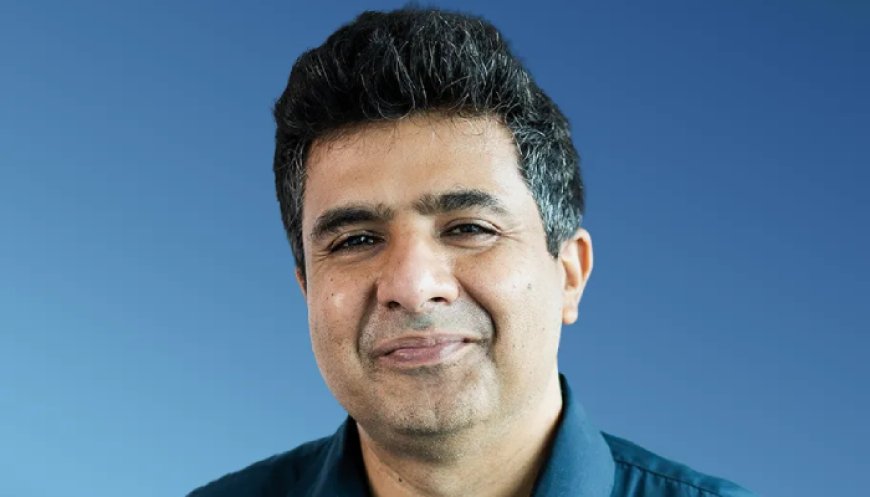
From AI-powered threats and cyber resilience to channel-led growth and the future of cybersecurity, this exclusive interaction presents a timely perspective on how Acronis and its partner ecosystem are preparing businesses for the next era of digital risk.
As artificial intelligence reshapes the cybersecurity landscape, it is creating a new paradox for businesses: while AI is empowering organisations to detect threats and strengthen their defences, it is simultaneously arming cybercriminals with increasingly sophisticated tools to launch faster, smarter and more damaging attacks. In this rapidly evolving environment, traditional endpoint security and fragmented protection strategies are no longer enough. The need of the hour is comprehensive cyber resilience — an integrated approach that brings together cybersecurity, data protection, business continuity and rapid recovery.
Acronis is positioning itself at the forefront of this transformation, championing a unified approach to cyber protection that combines cybersecurity, backup, disaster recovery and endpoint management on a single platform. Its focus is not merely on preventing cyberattacks but also on ensuring that businesses can withstand disruptions, recover quickly and maintain operational continuity in an increasingly unpredictable threat environment. As AI adoption accelerates, Acronis is also emphasising the importance of securing AI workloads, protecting digital identities and strengthening the entire technology ecosystem.
Under the leadership of Rajesh Chhabra, General Manager, India & Asia, Acronis, the company has strengthened its presence in India through a channel-first growth strategy. With India revenue growing by 90% and a network of more than 500 partners across the country, Acronis is expanding its reach beyond major metropolitan markets, placing particular emphasis on Tier-2 and Tier-3 cities. Chhabra's approach combines business expansion with partner empowerment, cybersecurity awareness and the development of a stronger ecosystem capable of delivering advanced protection and recovery services to businesses of every size.
In this SME Channels Special Exclusive, Chhabra offers an incisive perspective on how the cybersecurity battle is changing in the AI era and what Indian businesses must do to stay ahead of emerging threats. The interaction explores whether AI-enabled attacks are evolving faster than defensive capabilities, how prepared India's rapidly expanding data centre ecosystem is for cyber disruptions, and why enterprises must adopt a unified cyber protection and recovery strategy.
The discussion also examines the limitations of conventional endpoint-centric security, the emerging need to protect AI models, cloud workloads and machine identities, and the practical measures businesses must take to ensure that backups remain secure, uncompromised and recoverable. Importantly, it addresses the cybersecurity challenges confronting Indian SMEs and the growing role of managed service providers and channel partners in democratising enterprise-grade protection.
Looking ahead, Chhabra outlines the new recurring-revenue opportunities that Acronis can unlock for channel partners through managed security, data protection, disaster recovery and infrastructure services, while highlighting the skills partners must develop to capitalise on this transition. He also shares his perspective on the three defining cybersecurity priorities that Indian businesses must embrace between now and 2030. Edited excerpts…
Q. Are AI-enabled attacks evolving faster than AI-assisted defenses? How should Indian businesses respond?
Currently, attackers have the advantage, mainly because they have fewer rules to follow. An attacker can experiment, fail multiple times and only needs to succeed once. A defender has to get it right every single day, inside compliance boundaries and legacy environments. AI has also made the barrier to entry lower: convincing phishing, deepfake voice calls and quick reconnaissance no longer need a skilled team.
Indian businesses should do three things primarily: consolidate their security stack to improve visibility and the quality of data available for analysis; automate appropriate detection and response workflows so humans handle decisions, not noise; and keep people in the loop through regular awareness training, because people remain an important attack vector.
“Prioritize what must come back first, whether that is billing, patient records or payments. Regular recovery exercises can help organizations identify gaps and reduce avoidable downtime.”
-Rajesh Chhabra, General Manager, India & Asia, Acronis
Q. Is India’s data center ecosystem adequately prepared? What must enterprises and service providers do for continuity?
India is growing rapidly, and that is exactly where the risk sits. When a data center supports banking, hospitals, government services and GCCs together, an outage is no longer an IT problem; it can disrupt essential services. Preparedness is improving, but it is uneven. Many operators are strong on physical resilience (power, cooling, redundancy) and still catching up on cyber resilience.
Continuity has to be designed in, not added later. Service providers need segmented environments, strict access controls and tested recovery plans. Enterprises hosting critical workloads should ask their providers hard questions: how often is recovery tested, how quickly can systems come back, and what happens if the backup layer itself is hit?
The simplest test is this: if your primary environment went dark tomorrow, do you know, with evidence, how long it would take to be back? If the answer is a guess, that is the gap to close.
Q. Should businesses adopt a unified cyber protection and recovery strategy? How does Acronis approach this?
Yes, and the reason is simple. Attackers may target recovery systems, backups and security tools before deploying ransomware. If protection and recovery sit in separate silos, gaps can emerge.
Our approach at Acronis is to bring cybersecurity, data protection and endpoint management together on a single platform. Detection, backup, disaster recovery and response share the same context, with the goal of coordinating protective actions across security and backup workflows. This integrated approach can simplify management and support more reliable recovery planning.
Q. Is an endpoint-centric security architecture still sufficient for the AI-enabled enterprise? What new layers must be prioritized?
Endpoint security is still essential, but on its own it is no longer enough. The enterprise today includes GPU clusters, AI models, APIs, cloud workloads and a growing number of machine identities, many of which have no screen, no user and no traditional agent.
Organizations should prioritize a few new layers. First, identity security, including non-human identities such as service accounts, tokens and API keys, which are often overprivileged and rarely rotated. Second, visibility across cloud and AI workloads, so teams know what is running and where. Third, protection of the AI pipeline itself, including training data, model integrity and access to inference endpoints. Finally, all of this needs to feed into one detection and response view. Otherwise security teams end up chasing signals across five different dashboards.
Q. How can enterprises establish that their backups are secure, uncompromised and recoverable? What practical steps minimize downtime?
A backup is only proven when it has been restored. Too many organizations discover problems during an actual attack, which is when the consequences are most serious.
Practical measures include keeping immutable copies that are protected against unauthorized alteration or deletion; following the 3-2-1 principle with at least one copy isolated from the main network; scanning backups for malware before restoring, so you don’t bring the infection back with you; and enforcing multifactor authentication on the backup environment itself.
Beyond that, rehearse. Run recovery drills on your most critical applications, measure how long they take, and set realistic recovery time targets. Prioritize what must come back first, whether that is billing, patient records or payments. Regular recovery exercises can help organizations identify gaps and reduce avoidable downtime.
Q. How can Indian SMEs defend themselves without prohibitive costs? Can MSPs and channel partners bridge the gap?
SMEs are often seen as too small to target, but attackers see them as easy and, increasingly, as a way into larger supply chains. Many SMEs lack dedicated security operations resources.
This is where MSPs and channel partners come in. By delivering security as a managed service, a partner can provide an SME with managed security capabilities through a recurring service model. A single platform covering backup, endpoint protection, email security and recovery can simplify management compared with maintaining separate tools.
For SMEs, the basics still matter most: regular, tested backups, multifactor authentication, timely patching and employee awareness. Applied consistently, these measures can reduce exposure to common threats. Partners can help manage ongoing protection and response.
Q. What new revenue opportunities can Acronis enable for Indian channel partners? How should partners build the skills for this transition?
The opportunity for Indian channel partners is to develop recurring services revenue by helping clients maintain secure, reliable business operations. For partners already providing backup, Acronis creates a path to expand into managed endpoint protection, patch management and disaster recovery through an integrated platform. Partners can package managed protection, patch management and tested recovery as ongoing services aligned with each client's operational needs.
Acronis Cyber Frame opens up another opportunity: expanding into infrastructure services. Partners can offer infrastructure as a service (IaaS) using partner-hosted infrastructure or Acronis-hosted Cyber Frame Cloud, alongside cyber protection. This may create revenue opportunities from workload migration, ongoing hosting and infrastructure management, while extending existing backup and security relationships.
For SMEs, the value is access to security and recovery expertise without having to manage every function internally. For partners, this can help deepen client relationships and grow revenue through services such as security assessments, recovery testing and ongoing management.
Making this transition requires both technical expertise and commercial skills. Teams need practical training in security configuration, incident triage and recovery, supported by vendor training and hands-on exercises. Partners expanding into infrastructure services should also develop skills in virtualization, networking, storage, workload migration and capacity planning. Commercial teams also need to learn how to scope services, explain client outcomes and price recurring offerings.
Q. What are the three most important cybersecurity priorities for Indian businesses between now and 2030?
First, build cyber resilience, not just prevention. Assume a breach will happen, and make sure critical systems can be recovered quickly and verifiably.
Second, secure the AI-enabled enterprise. As AI models, data pipelines and machine identities multiply, they need the same discipline we apply to users and devices: access control, visibility and monitoring.
Third, invest in people and partnerships. Technology alone will not close the skills gap. Businesses need security-aware employees, and many, especially SMEs, will need trusted MSPs and partners to extend their capabilities.
If these three are in place, organizations will be well positioned to grow with AI without being held back by the risks that come with it.