



OUTPACING DARK AI: KASPERSKY’S BLUEPRINT TO SECURE A HYPER-CONNECTED, AI-DRIVEN WORLD
 Editor
From tackling ‘Dark AI’ to securing converged IT-OT environments, Kaspersky is redefining how enterprises approach next-gen cybersecurity by staying laser-focused on visibility, governance, and preparedness to stay ahead of emerging threats
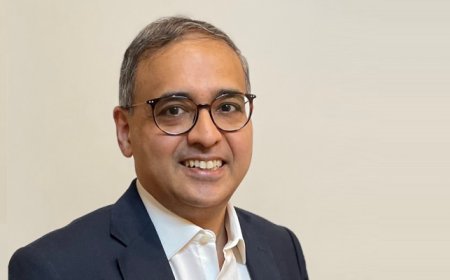
Amid rising geopolitical tensions and an increasingly complex and dynamic cyber threat landscape, Adrian Hia, Kaspersky’s APAC head, is steering the company with a clear focus on resilience, visibility, and critical infrastructure protection. His strategic direction reflects a clear shift towards proactive, governance-led cybersecurity in an era of growing global uncertainty. His approach signals a move towards more adaptive and forward-looking security frameworks.
SME Channels had caught up with Adrian amidst his busy schedule during his recent India visit to understand his vision and key business priorities. The interaction offers timely strategic context for businesses and policymakers alike, given the kind of acceleration in AI infrastructure and digital investments across the region,
In this special SME Channels exclusive, Adrian Hia, Managing Director, Asia Pacific at Kaspersky, discusses the growing importance of securing critical infrastructure amid rising cyber threats and rapid digital transformation. He highlights the challenges posed by AI-driven risks, the need for strong data governance, and why visibility across IT and OT environments will be central to future cybersecurity strategies.
Adrian outlines how cybersecurity is evolving from an IT function to a critical pillar of national and enterprise resilience. Delving deeper into the dark universe of “Dark AI,” and the risks of uncontrolled AI adoption, he sheds light on why visibility, governance, and preparedness will define the next phase of cybersecurity in India. Edited Excerpts…
The ongoing Iran–Israel conflict is increasingly turning into a hybrid war where cyber operations run parallel to missile strikes. Are we witnessing a new era where cybersecurity is no longer an IT issue but a core pillar of national defense?”
Over the past six months, I have travelled extensively and interacted with customers, government bodies, and policy offices. One clear shift I am seeing is the growing focus on critical infrastructure (CI) as a central priority.
This ties back to what I shared earlier about the convergence of IT and OT. Today, devices like IP cameras, digital meters, and even smart locks blur the lines between IT and OT—they are all interconnected.
While cybercrime such as financial fraud, hacking, and deepfakes remains important, the potential consequences of attacks on critical infrastructure—telecom, power, banking, airports, and transportation—are far more devastating. This is why organisations and governments are now prioritising CI and OT security.
Encouragingly, more than 90% of enterprises are now looking at SOC and OT SOC capabilities. Even mid-sized enterprises recognise the need for security operations centres, though many lack the resources and are increasingly turning to outsourcing.
This is where economies of scale come in. Instead of building one SOC per organisation, providers can serve hundreds or thousands of customers, significantly reducing costs.
Regulatory frameworks such as DPDP, SEBI, and RBI guidelines are also pushing organisations in the right direction. While it will take time to reach equilibrium, the overall direction is positive.
“You cannot protect what you cannot see—visibility is the foundation of security.”- Adrian Hia, Managing Director, Asia Pacific at Kaspersky
“As AI becomes more accessible, ‘Dark AI’—AI used by cybercriminals for automated attacks, deepfake scams, and intelligent malware—is evolving rapidly. Do you believe the cybersecurity industry is already losing the early battle against Dark AI, or do defenders still have a technological edge?
If we take a step back, what we call “Dark AI” or “Shadow AI” today is really an evolution of “Shadow IT,” which has existed for years—where individuals misuse enterprise resources, such as for crypto mining.
Can this be stopped? The answer is NO.
However, the most effective way to counter this is not to avoid AI, but to use it responsibly. Organisations must focus on data classification—categorising data into different sensitivity levels. Critical data should remain protected and not be shared with open AI platforms, while less sensitive data can be used more freely.
The real issue today is that users are uploading everything to AI systems without governance. This creates opportunities for cybercriminals to exploit that data.
Rather than fearing AI, organisations should implement strong data governance policies. Humans still have a critical role to play, and this will be an evolving process with lessons learned over time.
Generative AI is transforming cybersecurity operations—from faster threat analysis to automated incident response. But could over-reliance on GenAI create a dangerous blind spot if attackers learn to manipulate or poison these AI models?”
AI and GenAI are already transforming areas like threat detection and incident response. However, one key concern is not over-reliance—but control.
While AI can manage detection effectively, the final decision-making authority—especially for response and remediation—must remain with humans.
For example, in critical infrastructure environments, no organisation will allow a vendor or system to autonomously shut down operations such as an airport. These decisions must rest with the customer, authorities, or government.
The real differentiator is not just technology, but people and processes. Cybersecurity drills—similar to fire drills—are essential. Organisations must test how teams respond to attacks, especially during non-peak hours.
Ultimately, preparedness through regular drills and governance frameworks will determine whether an organisation can withstand an attack.
India is one of the fastest growing markets in the APAC region for Kaspersky. If you had to make one big bet on India over the next five years—enterprise cybersecurity, threat intelligence, AI-driven security platforms, or MSSP partnerships—which area will define Kaspersky’s biggest growth story here?”
India is one of the fastest-growing markets in the APAC region, and a key theme we are focusing on is “Speed Outpacing Visibility.”
Many organisations today have complete visibility of their IT assets—laptops, servers, and cloud environments. However, they often lack visibility into IoT and OT assets such as cameras, routers, and digital sensors, all of which are potential entry points for cyber threats.
Our big bet is on visibility and observability. Through our Open Single Management Platform (OSMP), we aim to provide a unified view of all assets—endpoints, IoT devices, and networks—on a single dashboard.
This enables organisations to understand what they own, identify vulnerabilities, and implement effective protection strategies. Without visibility, it is impossible to secure an environment.
As India continues rapid digitisation, cybersecurity must evolve beyond endpoint protection to a more comprehensive, integrated approach.
Would you please detail us on the IT-OT convergence and its impact on the next phase of cybersecurity?
We are witnessing increasing convergence between IT and OT environments. Today, even devices like IP cameras can become entry points for attacks that eventually impact data centres.
Organisations are no longer just asking how to protect laptops—they are asking how to secure OT assets and critical infrastructure. This is driving the need for integrated SOC models that combine IT and OT security.
This convergence will define the next phase of cybersecurity transformation in India over the next three to five years.
India has been witnessing rapid digitization over the last decade. However, rapid digitisation also increase systemic risk for enterprises and economies. What would be your sage advice to counter these emerging risks?
India’s pace of digitisation is remarkable. Processes that once took months can now be completed online in minutes, driving efficiency and economic growth.
However, this rapid transformation also introduces new risks. As systems become more interconnected—across sectors like banking, healthcare, and payments—a single vulnerability can create a domino effect across sectors, triggering widespread consequences.
This is why organisations must ensure that the speed of digitisation does not outpace visibility. Without knowing what assets exist and how they are secured, enterprises risk exposing themselves to significant threats.