



India's Delivery Operations Are Evolving from a Cost Center to a Value Creator
 Editor
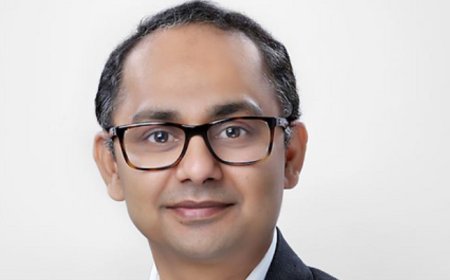
Archana Sharma, Senior Director of Service Delivery at TELUS Digital
Archana brings over three decades of industry expertise across service delivery management, digital transformation, process optimization, and enterprise operations. Throughout her career—including previous leadership roles at Xavient Information Systems, Netsoft Informatics, and eCGSoft Inc.—she has specialized in driving customer-centric innovation, leading cross-functional global teams, and managing transformation programs across the telecom and technology domains. She holds an MBA in IT and Project Management and plays a critical role in strengthening delivery capabilities and operational excellence at scale.
As India’s Global Capability Centers evolve beyond traditional back-office execution, cost efficiency is taking a backseat to strategic value creation, enterprise-wide innovation, and direct impact on global business decisions.
The Shift: From Execution Engine to Strategic Value Creator
Twenty years ago, if you asked what an India delivery hub did, the answer was predictable: back-office processing, transaction handling, support functions run efficiently and cheaply. That was the deal, and for a long time, it worked well for everyone involved.
That picture looks quite different today. Walk into many of these delivery hubs now, and you will find teams building AI models, owning product roadmaps, running cybersecurity operations, and sitting in on strategy discussions with global leadership. The change hasn't come from cheaper labor costs; that argument has largely run its course. It's come from something more substantial: a talent base that has matured into genuine engineering and technology depth, combined with leaders who know how to run businesses, not just processes.
The practical effect of this is that success looks different now. Cost savings used to be the main scorecard. Increasingly, what matters is whether a center is solving real business problems, shipping innovation, improving customer outcomes, and earning a seat at the table when decisions are being made.
The Evolution Backed by Numbers
The numbers give a sense of how far we have come. India is now home to over 2,100 Global Capability Centers, employing close to 2.36 million people, and generating nearly
$100 billion in revenue in 2026. By any objective measure, the sheer scale of these operations far exceeds the traditional 'support work' categorization.
What's perhaps more interesting is who's setting these up. More than 500 companies from the Forbes Global 2000 list run capability centers in India, not as an experiment, but as a core part of how they operate globally. And the work happening inside these centers has shifted accordingly: less routine processing, more AI development, product engineering, analytics, finance transformation, and enterprise-wide modernization programs.
The growth trend suggests this isn't slowing down. The delivery centers being set up now are designed from day one to lead strategic functions, rather than grow into them over time, as older centers did.
Why Value Creation Is Becoming the New Benchmark
A lot of this comes down to how the work itself has changed. AI, cloud platforms, automation, and modern data engineering have raised the bar for what "good delivery" even means. Now, teams are expected to own outcomes, the whole process, start to finish, including the thinking behind it.
That's a meaningful difference in practice. A team that once executed a fixed set of steps for a customer process might now be redesigning the process entirely, building the tools that run it, and measuring its impact on customer satisfaction. Product decisions, transformation programs, and customer experience design increasingly sit with India-based teams, rather than being handed to them. The other shift worth noting is proximity to decision-making. It's now fairly common for Indian teams to be in the room, virtually or otherwise, when strategic calls are made, rather than finding out about decisions after the fact. That access changes how much influence a delivery center actually has on where a business is headed.
The Future: India's Role in Enterprise Transformation
Where does this go from here? The honest answer is that India's position is shifting from being a place where work gets delivered to being a place where capability gets built and exported: new products, new IP, new ways of solving problems, and much more.
Getting there needs real investment, not just ambition. Building AI capability that's actually embedded in how teams work, not bolted on as a side project. Going deeper into specific industries and domains rather than staying a generalist. Growing leaders who can make hard calls with global consequences. And getting serious about responsible AI governance, ethics, and accountability as these delivery hubs take on more sensitive and consequential work. None of this happens without continuous investment in people's skills at every level.
None of these is a new idea individually. But consistently putting them together at scale is what will separate organizations that keep growing in relevance from those that plateau.
The bigger point is this: cost efficiency got India's delivery ecosystem to where it is today, but it won't be what takes it further. The next stretch of growth will be judged by business value created, problems solved, and impact delivered, a different scorecard entirely, and one that India's delivery operations are increasingly built to meet.