



Teaching Employees to Prompt AI to Manage AI
 Editor
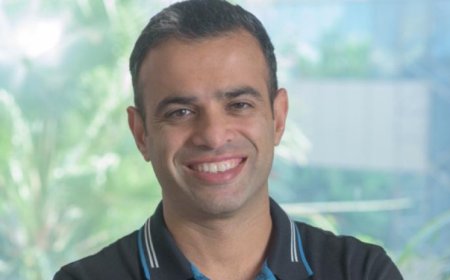
Anjali Sharma, VP - HR and Director, Global Head of L&D, Fulcrum Digital
Armed with over 23 years of solid industry experience across global organizations in strategic human capital leadership, Anjali is a seasoned People Management Leader known for building high-performance cultures, driving workforce transformation, and aligning HR strategy with business growth.
At Fulcrum Digital, she leads the global HR function, shaping talent strategy, organizational development, leadership capability, and people experience across geographies. Her approach combines operational excellence with a strong focus on future-ready workforce models in an AI-driven business landscape.
The article examines how the rise of agentic AI is changing the skills employees and managers need, with a focus on scenario-based learning, responsible AI adoption and the need for managers to effectively lead hybrid human-AI teams.
Two years ago, the challenge was ‘AI literacy’, getting people comfortable with the idea that these tools existed and could help. Last year, it was prompting teaching people to ask well enough to get something useful back. Now we're on to something harder: supervision.
The reason is simple. AI itself has changed shape. It no longer just waits for a prompt and hands back an answer. It plans, sequences actions, and executes them with very little human input along the way. That's a fundamentally different working relationship, and it demands a different skill from the people managing it.
For the last two years, L&D has leaned on training hours and certification counts as a proxy for readiness. That was reasonable when the skill in question was "can this person operate a new tool." It's a poor measure now, because the skill is judgment, and judgment doesn't show up on a completion dashboard. You can finish every module in a course and still not know when to pull the plug on an AI recommendation that's quietly wrong.
From literacy to leadership
Most large organizations have already run their prompt-training cycles. Employees across functions know how to get decent output from generative tools; that battle is mostly won. Agentic AI raises the bar differently than prompting ever did. When a system can independently plan a multi-step task and carry it out, the employee isn't drafting an input anymore. They're deciding what the system should be allowed to do, checking what it did, and stepping in when it's about to do something it shouldn't.
That's not a technical skill, it's a leadership skill. It means treating an AI system the way you'd treat a sharp but inexperienced new hire: question the first draft, ask why a call was made, and check for edge cases nobody tested.
The real gap isn't skill. It's judgment.
India has consistently been one of the more aggressive economies on workforce reskilling, and AI literacy programs have scaled fast here. So, the easy assumption is that we're in good shape. We're not, because the gap now isn't about literacy. It's about contextual decision-making, ethical reasoning, and something more basic: knowing when a call isn't yours to make, and isn't the AI's either, but needs to go up the chain.
That's harder to build than a software skill. You can't teach it in a workshop or certify it with a badge, because it isn't knowledge, it's instinct, built from repeated exposure to messy, real situations where the right answer isn't obvious and getting it wrong has an actual cost. A simulation with no stakes won't build it. Neither will a policy document nobody reads past the first page.
What L&D needs to build instead
This is where the traditional L&D playbook runs out of road. Training hours and certifications were built for skill acquisition, not judgment. Supervising autonomous systems needs scenario-based learning built around realistic, ambiguous situations, structured exposure to how AI governance works, and continuous reinforcement rather than a one-time milestone.
The scenario work matters most, and it's the part most L&D functions haven't figured out yet. Employees need real practice spotting when an AI recommendation is subtly wrong, incomplete, or resting on a flawed assumption, and practice intervening before it turns into an action nobody can walk back. That instinct is built through repetition, not through reading about what could go wrong.
Managers now lead hybrid teams
There's a second-order effect that doesn't get talked about enough. As AI becomes a genuine collaborator, managers are now leading teams that include both human and AI contributors, whether they've clocked it or not. That demands capabilities most managers were never trained for: overseeing a hybrid team, validating AI output before it moves downstream, owning accountability when something goes wrong, and driving responsible AI adoption within their own teams rather than leaving it to someone else.
The managers who build these capabilities become the connective tissue between what the organization wants from AI and how much risk it can absorb. The ones who don't will either over-trust the system and let errors compound, or under-use it and leave capability on the table. Both are expensive, and neither announces itself until the damage is done.
The bottom line
The conversation around enterprise AI is shifting from adoption to accountability, and that shift changes what "AI-ready" actually means. As these systems become more autonomous, human judgment doesn't become less important. It becomes the whole point. The organizations that pull ahead won't be the ones with the highest AI fluency numbers. They'll be the ones that built employees who know when to question AI, when to slow it down, and when to step in and make the call themselves.