• ABOUT US
  • Advertise With Us
  • Contact US
  • Edit Calendar
IT Magazine for Channel Partners in India | SMEChannels
Advertisement
  • Home
  • News
    • AI & ML
    • Cloud Computing
    • Cyber Security
    • Surveillance
    • Automation
    • Server & Storage
    • Power Solutions
    • Networking
  • Hardware News
    • PC-and-Notebooks
    • Component
    • Printers & Peripherals
    • Software
    • Semiconductor
  • Events & Webinars
    • Channel Accelerator Awards 2025
    • Channel Accelerator Awards 2024
    • MSP India Summit 2024
    • MSP India Summit 2023
    • Channel Accelerator Awards 2023
    • SME Channels Summit & Awards 2022
    • SME Channels Summit & Awards 2021
    • WEBINAR
    • SME AWARDS 2020
  • Women in IT
  • Corporate News
  • Interview
  • Executives Movement
  • Partner Corner
No Result
View All Result
  • Home
  • News
    • AI & ML
    • Cloud Computing
    • Cyber Security
    • Surveillance
    • Automation
    • Server & Storage
    • Power Solutions
    • Networking
  • Hardware News
    • PC-and-Notebooks
    • Component
    • Printers & Peripherals
    • Software
    • Semiconductor
  • Events & Webinars
    • Channel Accelerator Awards 2025
    • Channel Accelerator Awards 2024
    • MSP India Summit 2024
    • MSP India Summit 2023
    • Channel Accelerator Awards 2023
    • SME Channels Summit & Awards 2022
    • SME Channels Summit & Awards 2021
    • WEBINAR
    • SME AWARDS 2020
  • Women in IT
  • Corporate News
  • Interview
  • Executives Movement
  • Partner Corner
No Result
View All Result
IT Magazine for Channel Partners in India | SMEChannels
No Result
View All Result
Home Guest Article

How can India Stymie the Impact of Trump’s H1B Visa Fee Hike? 

SME Channels by SME Channels
September 24, 2025
in Guest Article, News

By Manash Ranjan Debata 

Trump’s H1B Visa fee hike has taken the Indian IT industry by storm. It has been the worst news for lakhs of Indian talent waiting to realize their American dream. In one stroke, decades of business relations were undone. Many panicked Indian youth de-boarded an India-bound flight, fearing they won’t be allowed entry to US again. This has become a hard question for Indian leadership to address. Foreign Minister Dr. Jaishankar took it up with Mike Rubio, but no immediate solution is in sight. The truth is that once the U.S. imposes a regulatory or fiscal barrier like a steep H1B visa fee, India’s options are partly constrained by its leverage, diplomatic tools, and structural strengths.  

Despite this, there are several strategies and countermeasures on India’s table — some defensive, some offensive — to mitigate or stymie the negative effects of this narrow thinking. Let’s present here a mix of policy, structural, diplomatic, and industry-level levers.  

First, understanding the challenge & constraints. Let’s clarify what we’re up against.  The new U.S. rule (as currently reported) would impose a $100,000 fee on new H1B visa applications. This is a dramatic jump and would make many new transfers or hires via H1B prohibitively expensive. Existing visa holders, renewals, etc., may be exempt or subject to different rules. The burden falls disproportionately on Indian IT/tech firms, since Indian nationals account for a large share of H1B beneficiaries.) 

The U.S. is trying to frame this as protecting U.S. jobs or reducing abuse of the H1B program. So there is a political narrative to counter, not just financial pressure. 

Because sovereignty and immigration are core to a country’s rights, India cannot unilaterally “veto” what the U.S. does. But it can use its influence, partnerships, industrial strengths, and incentives to reorient flows and reduce dependence. 

So, what are the strategic and policy responses for India? Here are potential measures India could take. Some are high political (requiring government leadership), some are more at the level of industry or states. They vary in feasibility, time horizon, and risk. 

India should raise the issue at high levels in U.S.–India bilateral talks and invoke reciprocity or conditional leverage (e.g., trade, market access, visas). It can engage through multilateral forums (WTO, G20), emphasizing fair mobility of skilled workers. – Use “soft power” arguments: India supplies key talent, helps U.S. innovation, etc.

The Government has to increase incentives for Indian technologists to stay or return: R&D grants, tax breaks, startup funding, and infrastructure in tech corridors. It has to accelerate “brain gain” policies, e.g., easier funding, visas to Indians abroad to return, and dual citizenship. Global remote work has to be promoted, allowing Indian firms to capture work that would have otherwise required relocating talent.

Many already foresee U.S. companies shifting more work offshore rather than relocating people. The government should use the opportunity to provide better incentives for multinationals to expand centers in India, while improving infrastructure (connectivity, power, data centers, and regulatory environment) in tech hubs to attract more high-end work. 

India would do well to focus on technology, AI, cloud, cybersecurity, and niche specializations that can be delivered remotely (so the need to send people across borders is minimized). It should encourage cross-border services, not just relocations, and push Indian firms to bid for U.S. contracts from India. Meanwhile, the govt should extend support to the all-important Indian MSMEs /startups to globalize digitally, reducing dependence on U.S. clients that insist on an onshore presence.

Creating a “transition fund” or “buffer scheme” to help Indian IT/consultancy firms absorb cost impacts (like subsidies, grants, interest-free loans) will go a long way to minimize the impact. The govt. should develop insurance or hedging mechanisms for firms whose margins will be stressed by the fee hike and offer tax relief or credits on revenue from U.S. contracts to offset the extra cost. 

India can’t sit silently. It has to aggressively look for alternative markets & talent diversification. It should encourage Indian professionals to not just aim for the U.S., but also target Canada, the EU, and other innovation hubs. Similarly, Indian firms should double down in other geographies. 

Similarly, India should take steps to accelerate GCC / outsourcing growth. Since many U.S. firms may prefer not to pay a huge relocation premium, India can capture more of their IT/tech/operations work domestically by incentivizing those shifts aggressively.

Tags: H1B Visa FeeIndian FirmsIndian IT industry
Previous Post

EMBRACING AN AI-FIRST STRATEGY

Next Post

OpenText Cybersecurity Report: 92% of MSPs See AI Driving Growth, But Readiness Gap Widens

Related Posts

DOCOMO
AI & ML

DOCOMO Begins Commercial Deployment of Agentic AI System built on AWS’s managed services for Network Maintenance

March 5, 2026

Faiz Shakir, VP & Managing Director - India & ASEAN, Nutanix
AI & ML

AI Is Driving Rapid Container Adoption while Shadow IT and Organisational Silos Create AI Risks: Nutanix Enterprise Cloud Index survey

March 5, 2026

Chirag Shah, Founder and CEO of Pulse
Guest Article

How SaaS Is Reshaping SME Financial Planning with Predictive Insights

March 3, 2026
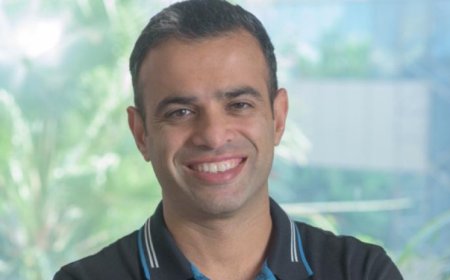
Sanjiv Krishen, Founder Chairman, Iris Global Services
News

Sanjiv Krishen Delivers Transformational Master class at AAFT’s School of Digital Marketing

March 3, 2026

Cijo George, Vice President of AI, Practo
Executives Movement

Practo appoints Cijo George as Vice President of AI

March 3, 2026

PM Modi inaugurated Micron Semiconductor Technology India Pvt Ltd’s Semiconductor Assembly and Test Facility in Sanand in Gujarat
Corporate News

Micron Celebrates Opening of India’s First Semiconductor Assembly and Test Facility

March 2, 2026

Print Magazine

About Us

SMEChannels is a leading IT Channel magazine, which represents the voice of more than 32,000 partners in India. The focus is to work towards the growth of the entire channel ecosystem. Therefore, the magazine covers all the topics that are relevant to the partner ecosystem. Broadly we cover technologies that go as solutions and services. Therefore, the topics we cover include cloud computing, big data & analytics, security, surveillance, mobility, enterprise applications, data center, 3D printing, robotics, machine learning, IOT, etc.

Contact Us

For Editorial:
Sanjay Mohapatra, Group Editor
Email : sanjay@accentinfomedia.com
Phone No. +91 99100 97969
Manash Ranjan Debata, Editor
Email : manash@accentinfomedia.com

For Print and Online Advertisement :

Sangram Rajeswar, Marketing Lead
Email : sangram@accentinfomedia.com
Phone No. +91 7042135833, +91 9938039199

For Events and Webinar:
Sanjib Mohapatra, Director
Email : sanjib@accentinfomedia.com

Usefull Links

  • ABOUT US
  • Advertise With Us
  • Contact US
  • Edit Calendar
  • ABOUT US
  • Advertise With Us
  • Contact US
  • Edit Calendar

@2026 Powered By SMEChannels Theme By Accent Info Media

No Result
View All Result
  • Home
  • News
    • AI & ML
    • Cloud Computing
    • Cyber Security
    • Surveillance
    • Automation
    • Server & Storage
    • Power Solutions
    • Networking
  • Hardware News
    • PC-and-Notebooks
    • Component
    • Printers & Peripherals
    • Software
    • Semiconductor
  • Events & Webinars
    • Channel Accelerator Awards 2025
    • Channel Accelerator Awards 2024
    • MSP India Summit 2024
    • MSP India Summit 2023
    • Channel Accelerator Awards 2023
    • SME Channels Summit & Awards 2022
    • SME Channels Summit & Awards 2021
    • WEBINAR
    • SME AWARDS 2020
  • Women in IT
  • Corporate News
  • Interview
  • Executives Movement
  • Partner Corner

@2026 Powered By SMEChannels Theme By Accent Info Media