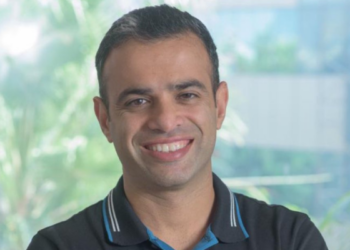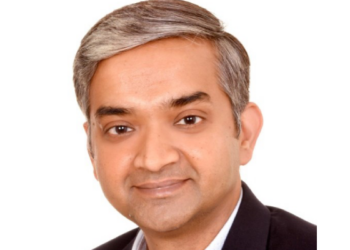



As VP- Regional Sales, Asia Pacific & Japan at SonicWall, Debasish is responsible for driving sales and growth in the region. Earlier, he was Country Director of India & SAARC at SonicWall for over a decade. Armed with more than 20 years of solid experience in the IT industry in India & Middle East, he has an impeccable track record as a business leader. During thi, he has focused on building and motivating cross-functional teams as well as managing and driving partner and customer relationships in various organizations. He has extensive experience in Channel Sales, Data Center Solution & IT Infrastructure solutions across verticals.
Debasish Mukherjee, Vice President, Regional Sales APJ at SonicWall Inc.
As AI systems are becoming increasingly sophisticated, particularly in replicating aspects of their own software, it’s critically important we ensure self-replicating AI is safe, responsible, and aligned with human values
Artificial intelligence (AI) has made incredible progress in the past few years, with computers learning and doing more and more. To me, the most thrilling but divisive field of study in AI may be self-replicating AI—machines that reproduce their own functionality. While full AI self-replication is purely theoretical, current research suggests that AI systems are becoming increasingly sophisticated, particularly in replicating aspects of their own software. As developments in these fields continue, it’s important we ensure self-replicating AI is safe, responsible, and aligned with human values.
At its simplest, self-replicating AI means AI systems that can replicate themselves automatically. This could be achieved by replicating their code in software form. Such AI theoretically would have evolutionary algorithms integrated within, allowing the software to improve itself continuously. Still, actual development currently tops out at the software level of replication, it needs to be human guided, and it has to work in defined spaces.
There are currently studies that focus on self-updating software where the AI models set their parameters without human adjustment utilizing machine learning processes. Those types of self-improving machines are being implemented today already in natural language, predictive modelling, and machine-made decisions. Full AI self-copying however is still entirely hypothetical.
Present outcomes indicate that AI systems have been demonstrated to be capable of copying portions of their functionality. This is a testament to the intelligence of AI, but care should be taken to distinguish between software duplication and independent self-replication. Compared to living things that reproduce and replicate themselves biologically, AI systems continue to require set parameters, human assistance, and engineered environments to be efficient.
Ethical and Security Concerns
Concerns about self-replicating AI for security and ethics are increasing. 2024 was a breakthrough year for AI governance and safety, with the AI Action Summit in Paris playing a prominent role. The experts during the summit emphasized that AI development should be weighed against strong security controls, pushing for international minimum safety standards to lower the risk potential. One of the key concerns is ensuring AI systems are not able to reproduce in an uncontrolled manner, which could lead to unforeseen consequences or misuse by malicious parties. Some potential risks include:
- Uncontrolled Proliferation. AI systems that can replicate without bounds can spread uncontrollably, leading to unpredictable consequences in virtual as well as physical environments.
- Malicious Use. Cybercriminals could attempt to use AI replication for sinister purposes, such as developing independent malware or sophisticated cyberattacks.
- Loss of Human Control. If self-replicating AI is enabled to grow strong enough to survive and evolve on its own, independent of human decision-making, manipulating its behavior and ethics might not be as possible.
To keep such threats under control, security testing and regulatory oversight should be implemented. Product security testing can identify vulnerabilities in AI models that may be employed to reduce unintended replication. Penetration testing and security audits can discover vulnerabilities in AI code, preventing unauthorized control. And adversarial testing can be used to anticipate when cybercriminals may attempt to employ self-replicating AI to design autonomous malware or cyberattacks.
Independent security researchers and regulatory bodies have a duty to make sure AI replication is safe and doesn’t evade checks preventing uncontrolled proliferation.
The most crucial safety measures against AI replication threats include:
- Security Audits. Regular audits ensure AI systems do not develop a loophole in safety measures intended to keep them from uncontrolled replication.
- Adversarial Testing. Adversarial testing is about putting AI models through several stress tests so weaknesses can’t be identified and manipulated by criminals.
- Regulatory Frameworks. Governments and organizations need to create adequate regulations to regulate AI replication and prevent its abuse.
- Ethical AI Development. Developers of AI and organizations should be guided by ethical principles, ensuring transparency, responsibility, and security in AI development.
The Role of AI Ethics in Future Innovation
As development in AI increases, ethical aspects must always remain a top concern in future innovation in self-replicating AI. The combination of ethics and AI is more than a matter of safety; it is also about issues of autonomy, responsibility, and the overall effect of self-replicating systems on society. Once AI reaches a level where it can optimize its own capabilities without human intervention, it will be essential to ensure that such advances are in line with human values and for the benefit of society.
The Paris AI Action Summit illustrated the need for coordination between policymakers, researchers, and AI creators in establishing safety standards. One of the proposed answers that came from the conference is the placement of AI watchdog bodies that track progress in self-replicating AI and provide guidelines for their appropriate use. An open dialogue between governments, technology companies, and researchers can further help craft policy to encourage innovation as well as anticipate the risks.
While self-replicating AI is only theoretical today, its influence on the future of technology, security, and ethics is immense. As AI advances, proactive safety protocols, regulatory guidelines, and rigorous testing will be crucial to mitigating threats. By ensuring a responsible approach to AI development, we can unlock its potential for progress while avoiding unintended consequences.
In the coming years, AI research will certainly explore the possibilities of self-replicating systems but with an even stronger emphasis on security and ethics. The secret to a peaceful approach will be to make AI replication controlled, traceable, and aligned with our human values. If handled responsibly, self-replicating AI can revolutionize industries from automation to scientific research. But left uncontrolled, it can give rise to fresh security challenges for us to face.