



The Epic Rise of Sriperumbudur -- India’s Very Own Shenzhen
 Editor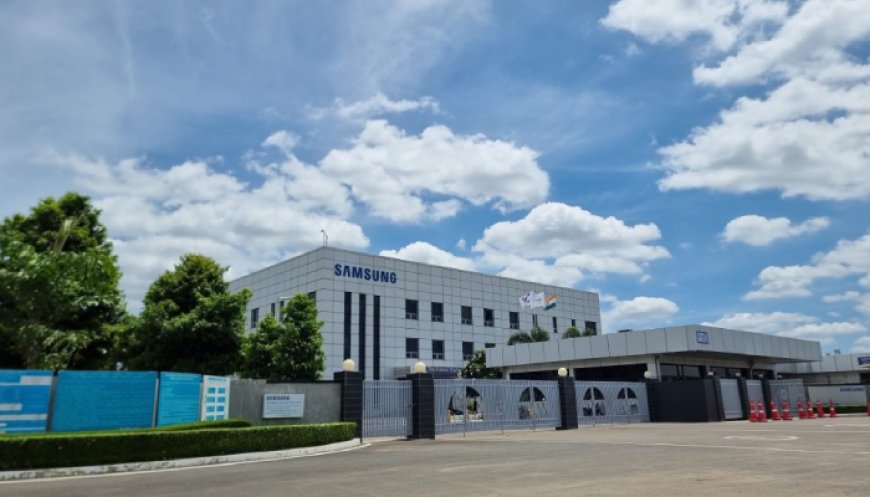
From a yet another typical Indian sleepy town to one of India’s most powerful manufacturing clusters and the beating industrial heart of Tamil Nadu, the rise of Sriperumbudur is driven by land availability, proximity to Chennai’s ports and airport, strong road connectivity, and a skilled workforce produced by Tamil Nadu’s vast network of engineering and technical institutes. Read to know more…
Two decades ago, Sriperumbudur was little more than a sleepy town on the outskirts of Chennai—known more for its fields and highways than for factories and global business. Today, it has become one of India’s most powerful manufacturing clusters and the beating industrial heart of Tamil Nadu’s economic rise.
The transformation did not happen overnight. It began when global manufacturing giants started looking beyond traditional production bases and identified southern India as a promising alternative. Sriperumbudur offered something rare: land availability, proximity to Chennai’s ports and airport, strong road connectivity, and a skilled workforce produced by Tamil Nadu’s vast network of engineering and technical institutes.
Once the first large factories came up, the change was dramatic.
Electronics and automotive giants including Samsung, Foxconn, and Dell, along with their network of component suppliers for the domestic as well as overseas markets began establishing massive production facilities in the region. What followed was a powerful ripple effect. Wherever a large manufacturer arrives, dozens—sometimes hundreds—of smaller suppliers follow. Component makers, logistics firms, packaging companies, warehousing providers, and service businesses began clustering around the industrial hub.
"The Sriperumbudur story reinforces a critical policy insight - manufacturing-led growth delivers its greatest impact when job creation is paired with skill development, fair wages and long-term workforce investment."
- Shailesh Khanna, Brand Lead, ManpowerGroup India

Soon, the once-sleepy town evolved into a bustling manufacturing ecosystem.
"The Sriperumbudur story reinforces a critical policy insight - manufacturing-led growth delivers its greatest impact when job creation is paired with skill development, fair wages and long-term workforce investment," says ManpowerGroup India Brand Lead Shailesh Khanna.
"Companies like Samsung Electronics demonstrate how early, sustained industrial investments can transform regional economies - not just by creating employment but by formalising livelihoods, raising income and improving workforce productivity," Shailesh futher adds.
Industry pundits claim that global MNCs like Hyundai and Samsung helped establish wage and welfare benchmarks that influenced the broader ecosystem.
Today, thousands of workers travel daily to the industrial belt around Sriperumbudur. The factories have created more than 70,000 direct jobs, while many more livelihoods depend indirectly on the manufacturing boom. Restaurants, transport services, hostels, training centers, and housing complexes have mushroomed across the area, turning the region into a thriving economic corridor.
For Tamil Nadu, the impact has been profound.
The state has long cultivated a reputation for industrial discipline, skilled manpower, and stable governance. Sriperumbudur has become the perfect example of how these strengths translate into real economic momentum. Manufacturing output from this region contributes significantly to the state’s robust growth, helping Tamil Nadu emerge as one of India’s fastest-growing economies.
Another crucial factor behind the region’s rise is its integration with global supply chains. Products manufactured here—from electronics to automotive components—are shipped across international markets. In an era when companies are diversifying production beyond traditional manufacturing hubs, Sriperumbudur has positioned itself as a key destination.
The success of the cluster has also created a powerful “industrial gravity.” Once a region reaches a certain scale, it begins attracting even more investment. Companies prefer locations where suppliers, skilled workers, infrastructure, and logistics networks are already available. Sriperumbudur has now reached that stage—where growth feeds further growth.
But perhaps the most compelling part of the story lies in its human dimension.
For thousands of young workers from nearby towns and villages, the factories represent opportunity—steady employment, skill development, and upward mobility. What was once an agricultural belt is now a place where global manufacturing meets local ambition.
Sriperumbudur’s journey is more than just an industrial success story. It is a powerful example of how the right mix of infrastructure, policy support, talent, and global investment can transform a small town into a strategic engine of economic growth.
And if current trends continue, this industrial hub near Chennai may not just power Tamil Nadu’s growth—it could become one of India’s most important manufacturing gateways to the world.
(Courtesy: Inputs from PTI)