

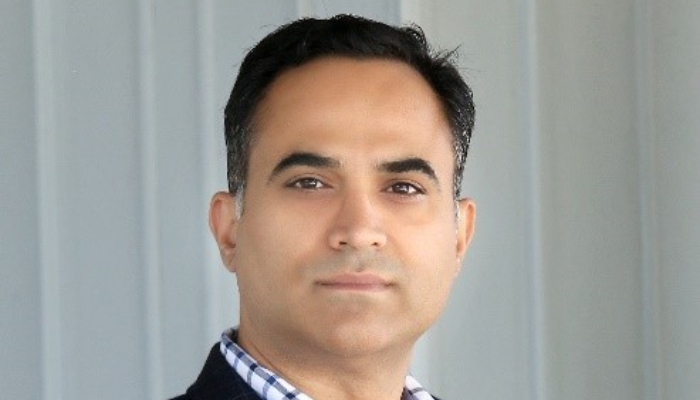
As enterprise tech demand recalibrates amid cost pressures and AI disruption, Dell Technologies is not rewriting its India strategy—it is refining it. Channel Chief Atul Mehta outlines how sharper execution, deeper partner alignment, and a full-stack portfolio could power Dell’s next phase of growth.
Dell Technologies is not rewriting its channel playbook—it is refining it. In an industry obsessed with reinvention, it is taking a contrarian path in India—stay consistent, but execute harder.
The Power of Staying the Course
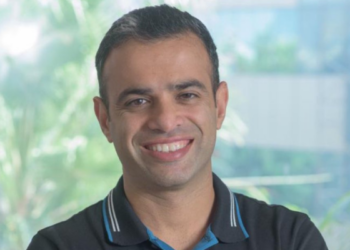
“Our long-term channel philosophy does not change. We continue to focus on expanding the customer base, strengthening our core business, and unlocking new opportunities through deeper engagement with partners,” says Atul Mehta, Senior Director and General Manager – India Channels at Dell Technologies
Even as market momentum has been uneven, the company is resisting the urge to overhaul its partner-led strategy. Instead, it is doubling down on fundamentals: expanding its customer base, strengthening core business lines, and unlocking new growth through deeper partner collaboration.
But beneath this apparent continuity lies a more nuanced shift—precision-led execution.
Targeted incentives for top-tier partners, sharper account mining strategies, and renewed competitive focus signal a company that is fine-tuning its growth engine rather than rebuilding it.
The company is choosing continuity over disruption, while intensifying execution in high-impact areas. What is changing, however, is the precision of interventions. Dell is rolling out targeted programs for top-tier Titanium partners, reintroducing incentive-led rebates, and pushing for deeper account mining to win competitive deals.
Commenting on the new thought in Dell’s channel strategy circles, Atul says, “What is evolving is how sharply we are executing against these priorities. For FY27, we are introducing more targeted interventions—especially for our top-tier partners.”
“We are rolling out focused client and storage programs for a select set of Titanium partners; reintroducing rebate structures to drive competitive account wins; and incentivising deeper account penetration, encouraging partners to build long-term customer relationships.” Adds Atul.
At a broader level, the company is doubling down on what has worked well—market expansion, ecosystem enablement, and partner-led growth.
“So while the strategy is stable, the execution is becoming far more aggressive and opportunity-driven,” says Atul.
The India Context: Cost Pressures Meet AI Ambition
Indian enterprises today are navigating a complex intersection of challenges.
On one hand, inflationary pressures are forcing CIOs to defer technology refresh cycles. On the other, the rapid rise of AI is creating urgent demand for faster, more intelligent, and intuitive systems.
“The future will be shaped by the intersection of AI, cost efficiency, and future-ready infrastructure,” says Atul. “Instead of looking at trends in isolation, we look at the real challenges customers are facing today.”
While organizations are grappling with exploding data volumes; rising cybersecurity risks; and the need for scalable, future-ready infrastructure. Against this backdrop, Dell’s response is rooted in its biggest strength—end-to-end capability.
Dell is aligning its strategy across four key pillars:
- Modern Workplace: Delivering integrated client devices and peripherals for enhanced user experience
- Modern Data Center: Building infrastructure that is not just current-ready but future-ready
- AI Adoption (Dell AI Factory): Enabling customers to operationalise AI at scale
- Cybersecurity & Sustainability: Embedding zero-trust principles and circular IT practices
“Our differentiation lies in delivering all of this as an integrated, end-to-end solution,” adds Atul.
This makes it evidently clear that from modern workplace solutions to AI-enabled infrastructure, and from zero-trust security to sustainable IT practices, the company is positioning itself as a holistic transformation partner, not just a hardware vendor.
Inside the Strategy: Blending Stability with Tactical Aggression
Dell’s FY27 channel strategy reflects a clear philosophy: don’t fix what isn’t broken—scale what works. A closer analysis reveals that the core pillars of its business remain intact. Customer base expansion; core business growth; and ecosystem enablement are stable. However, the execution is becoming more surgical.
In recent times, the company has added new thrust on select areas such as selective partner programs for high-performing Titanium partners; reintroduced rebates and incentives to win competitive accounts; and deeper engagement models to drive account stickiness.
The result is a strategy that blends stability with tactical aggression.
The Ecosystem Advantage: Betting on Collective Growth
Given the complexity of the India market, it’s uneven to bait on a particular partner segment to drive the next phase of growth. Whether it’s large SIs, mid-market partners, or cloud-native players – no single segment alone is a safe bait. Unlike competitors chasing specific partner segments, Dell is playing a broader game—orchestrating growth across the entire ecosystem.
“Growth in India will not come from one segment—it will come from the entire ecosystem. India is a highly diverse market, and each partner segment plays a distinct role,” says Atul.
In India, SMB and mid-market segments remain heavily partner-driven, while large enterprises depend on system integrators for complex deployments. When it comes to hyperscalers, even though they enable scale, still they rely on partner-led execution.
“Even in large deals, last-mile delivery is almost always partner-led. So it’s not about choosing one segment—it’s about enabling all segments to grow together,” he adds.
The insight is simple but powerful: India’s diversity demands an inclusive channel strategy and Dell has in place just that. In fact, a very potent one.
Dell believes growth, therefore, will not come from one segment—but from the interplay of many.
“The future will be shaped by the intersection of AI, cost efficiency, and future-ready infrastructure. Instead of looking at trends in isolation, we look at the real challenges customers are facing today.”
-Atul Mehta, Senior Director and General Manager – India Channels at Dell Technologies
AI as a Catalyst: From Product to Operating Model
For Dell, AI is not just a market opportunity—it is becoming an operational philosophy. “AI for us is not just a product—it is a way to transform how partners operate. We are embedding AI across the partner lifecycle to drive efficiency and intelligence,” affirms Atul.
This is evident in two key areas:
- AI-Driven Customer Solutions
Through initiatives like the Dell AI Factory, the company is enabling enterprises to adopt, scale, and operationalize AI workloads.
- AI-Led Partner Experience
Dell is embedding intelligence into its partner ecosystem:
- Demand forecasting to navigate supply constraints
- Faster, AI-driven quoting systems
- Tools to improve productivity and responsiveness
The goal is clear: turn partners into intelligent, agile growth engines. “We are helping partners adopt AI internally to improve efficiency; enhance responsiveness; and enable cross-learning. Ultimately, we want our partners to be faster, smarter, and more productive,” Atul adds.
Upskilling the Channel: Building Future-Ready Capabilities
As technology complexity rises, Dell is making targeted investments in partner readiness.
Rather than spreading resources thin, the company is prioritizing:
- Partners already aligned with AI and multi-cloud trends
- Certification-led training programs
- Structured initiatives like VxRail transitions
These programs go beyond training—offering migration support, financial incentives, and end-to-end enablement. The strategy reflects a pragmatic belief: future growth will be driven by partners who invest early in capability building.
The Loyalty Question: Navigating a Multi-Vendor World
Against the backdrop of a highly contested tech landscape, increasingly, the traditional idea of a “pure-play partner” is fading. Dell is very much cognizant of the sordid realities.
Today’s partners are increasingly vendor-agnostic, assembling best-of-breed solutions for customers. Dell recognizes this shift—and is adapting accordingly.
“We recognise this reality—and we focus on building loyalty through value, not restriction. Partners will always offer integrated solutions, and we respect that—especially in non-competing areas,” states Atul.
Dell’s response lies in strengthening its Partner Program (DTPP):
- Tiered progression (Gold, Platinum, Titanium)
- Performance-linked rewards
- Dedicated engagement teams
Rather than enforcing exclusivity, Dell is creating aspiration and economic incentives that naturally drive loyalty. “There is a strong aspirational element. Partners want to move up the tier because it brings market recognition; higher rewards; and deeper engagement with Dell,” he says.
Additionally, the company provides dedicated partner account managers; and it’s investing in capability building and new technologies. “Loyalty is a byproduct of consistent value creation.” he says.
“Growth in India will come from the entire ecosystem, not one segment.”
Hyperscalers vs Channels: A False Debate
The rise of hyperscalers has triggered concerns about channel relevance—but Dell sees no conflict. In reality, hyperscalers expand the market while partners enable last-mile execution and large deals often require collaborative delivery models.
Dell’s omnichannel strategy ensures that every player has a role—and an opportunity to grow.
Storage, VxRail & the Refresh Opportunity
One of Dell’s biggest near-term bets lies in storage and infrastructure refresh cycles.
With a large installed base ready for upgrade, the company is pushing:
- VxRail transitions
- Tech refresh programs
- Migration and deployment support
Backed by financial incentives, these initiatives are gaining strong traction—turning what could have been an execution challenge into a scalable growth opportunity.
The Big Bet: Winning Through Breadth
If there is one defining advantage Dell is banking on, it is this: unmatched portfolio depth.
From endpoints to data centers, from AI infrastructure to cybersecurity and sustainability, Dell offers a full-stack technology ecosystem. In an era where enterprises prefer integrated solutions over fragmented vendors, this breadth becomes a powerful differentiator.
Closing Thought: Build Before You Sell
Dell’s message to its partner community is both simple and strategic:
“Adopt AI before you sell AI.” It reflects a deeper philosophy—that capability precedes growth.
As India enters its next phase of digital and AI-led transformation, Dell is positioning itself not just as a technology provider, but as an ecosystem orchestrator—one that grows only when its partners do.