

As cybersecurity takes centre-stage for enterprises and individuals across the world, SonicWall bets big on the expanding market opportunities, riding the wave of massive digitization.
The pandemic driven massive digitalization and unprecedented cloud migration brought along with them a significant rise in cyberattacks and security breaches. Attackers went on to outsmart and realigned their tactics and techniques, including social engineering and exploited misconfigurations, to target cloud environments.
“If you look at this from a customer lens, he has got a wider menu of cybersecurity vendors to pick capabilities from. And this is actually causing a vendor fatigue.”
-Chandrodaya Prasad, Executive VP – Global Products, SonicWall
This too pushed security-conscious organizations to uptick their security preparedness through the right combination of expertise, intelligence, and adaptive technology. As ransomware, credential theft and endpoint security issues become all-pervasive, leading cybersecurity warriors like SonicWall moved to empower businesses to embrace zero tolerance for gaps in their security strategy in order to secure their crown jewels and their valuable data.
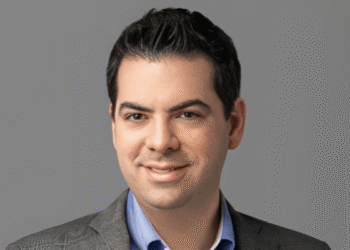
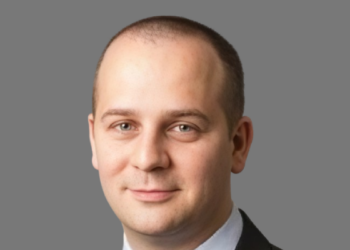
As we celebrate October as the International month of Cybersecurity, in an exclusive chat with SME Channels, Chandrodaya Prasad, Executive VP Global Products, SonicWall, and Debasish Mukherjee, VP Sales APJ, SonicWall, shed light on their company’s key focus areas; major security trends and customer transitions; the importance of Managed Service Partners; SonicWall’s platform approach instead of single product approach; and next-gen portfolio including its foray into IoT, SASE/ZTNA and MDRXDR space; and much more. The duo also discuss how SonicWall is helping organisations minimise cyber exposure and ultimately make risk management functions easier. Edited excerpts.
“The managed services requirements are coming up and that’s what I, clearly, see as a new trend in this region.”
-Debasish Mukherjee, VP Sales, APJ, SonicWall
Looking at the current cyber security market, what are the major global security trends you see in this market and what major transitions have overcome security customers in these years?
Chandrodaya Prasad:
From a global market perspective, a few trends have become prominent. The first one is the move to the cloud. Customers are moving and accessing the cloud for SaaS applications and are moving their infrastructure to the cloud as an Infrastructure-as-a-service. The second one is obviously with the pandemic, the explosion of this phenomenon called remote working. Sonicwall, for example, has a flexible policy regarding where employees can work, say, three days from home or three days from the office or two days from home. We are seeing that pattern across many organisations, even though some enterprises and corporations are now mandating people to come back to office. But a lot of the employees still want that flexibility of working remotely. It could be working from home, working from a coffee shop, working from an airport or working in the branch office. But what they all care about is having consistent experience, regardless of where they’re accessing their resources from. And those resources could be in a public cloud environment, in a private data center or in a hybrid environment.
The third one is the case of an increased cybersecurity attack in supply chain infrastructures and in other areas. There are a lot of processes that are being introduced to thwart some of those threats early in the development process. The fourth is the explosion of IoT devices. There are a lot of IoT devices that were traditionally restricted only to local area networks are now coming online. There is also this phenomenon called IT and OT convergence. So, a lot of these IoT devices are coming and connecting back into the cloud. And, last but not the least, there’s this notion of zero trust architectures. This notion of zero trust architectures requires you believe in the notion that you have to authenticate per app, per session, per user, etc. So, there is an increased adoption of all of this. Overall, to summarize, the threat landscape has increased tremendously. The cybersecurity skills shortage has also increased; the number of unfilled jobs in cybersecurity has also grown quite a bit. All these are leading to complexity in deployments from an end customer perspective.
One more trend that I would like to add here is the increased number of vendors in the cyber security space. So, if you look at this from a customer lens, he has got a wider menu of cybersecurity vendors to pick capabilities from. And this is actually causing a vendor fatigue. Therefore, there are increased challenges, increased complexity, increased cost and not to forget the rise of unfilled cybersecurity jobs. Those are some of the major trends, plus the pain points, that we see across in the global cybersecurity space.
Debasish Mukherjee:
I think it’s almost same in the APJ region as it’s at a global level. There is nothing different. Of course, probably the adoption rate is slightly different in the region, as some of the countries here are asking more for technologies like SASE, the cloud adoption, which is globally happening, while some countries are slightly behind others in technology adoption. The majority of the APJ regions are having cost sensitive or price sensitive customers, as per our feedback from the partner communities. There is also the cyber security skill gap. There is also the vendor fatigue, along with the complexities of the solutions. Customers are looking for the services model and they are primarily looking for managed services. The managed services requirements are coming up and that’s what I, clearly, see as a new trend in this region.
Chandrodaya Prasad:
I think that’s a great point. A lot of these customers are both in the enterprise and across all segments. They are looking for managed partners for their cybersecurity needs. So, the number of partners that are providing cyber security capabilities are increasing quite a lot. I think it was close to about 46% or so annually for the increase in managed security providers or managed providers providing security capability.
To select the right product from a plethora of Security Service providers is well-neigh close to searching for a needle in a haystack. What should a customer, who is looking for a comprehensive security solution for his enterprise, ideally look for?
Chandrodaya Prasad:
If you look at any one of the cybersecurity vendor’s marketing pitch, everybody claims to solve the same set of problems or with a different approach. But all claim to have very high efficacy and whatnot. If I were the customer, I would actually evaluate them based on the business outcomes that each of these vendors are driving. What use cases that they are trying to solve and how those use cases are applicable to my scenario, to my deployment, or to my needs. For example, if I am a distributed enterprise and I have, say, 3000 auto manufacturing or auto repair bodies across North America, then my needs might be very different from a distributed enterprise that is catering to insurance needs of people. So, in my auto Body Shop, I my use cases might be like, “Hey, I’m clocking in. I’m inputting the data for the relevant car and anything and everything associated and maybe there’s a past transaction. But if it’s an accountant’s office or whatever, then the use cases, the business outcomes would be quite different. As a customer, I should have a better understanding of what my use cases are, and what my business outcomes are. And then, I’ll look to see which one of these vendors will provide a solution for those business outcomes that is important and effective for me. That is when you start seeing the variation. Some might have capabilities that will provide them their business outcomes that they’re looking for. Or some might have only a partial set of capabilities and they might have to augment that with another vendor. It all starts with me as a customer having a good view of my use cases, and my business outcomes. And then looking for the vendor that will solve issues that I have, which can ensure those outcomes.
As a cyber security vendor, what is the crux of SonicWall’s Sales as well as Channel Strategies, globally?
Chandrodaya Prasad:
SonicWall has been here for over 30 years now. So our strength lies with the fact that we have been there for 30 plus years. If you go to a cybersecurity customer and ask him, “Do you trust somebody who has been out there for a few years or do you trust somebody who has been there for 30 plus years?”, he will obviously preferred the later. There’s a reason why we we’ve been around for 30 plus years now.
Second, the trend of using some of the new Generative AI tools to drive business outcomes from the data that exists already. We are sitting on a gold mine of 30 years of data. We had AI capabilities already. We had already implemented AI capabilities in our solutions offer. But now with some of the newer tool sets that we have, the business outcomes that we could drive by using some of those Gen AI tools is pretty much remarkable. Even though, SonicWall is known for its firewall capabilities, we have 12 plus different products in our portfolio. We continue to develop our capabilities organically. We are also going to build out our stack, may be by partnering with other vendors. Plus, we are also looking at some inorganic options. So, we’ll continue to build out our technology stack plus integrating with, as I said, with third party partners across various tools. Last but not the least, with 30 plus years in business and partnering with 17,000 plus partners, we operate in over 175 countries. Our brand comes with a lot of trust, with a lot of home-grown knowledge in terms of cybersecurity.